


The views and opinions expressed in this editorial article are those of the author and do not reflect the official policy or position of Salina Post or Eagle Media. The editorial is intended to stimulate critical thinking and debate on issues of public interest and should be read with an open mind. Readers are encouraged to consider multiple sources of information and to form their own informed opinions.
By: JAY VANIER
Public debate in Kansas has increasingly blurred a critical distinction. Critics have begun treating all STAR bond projects as if they operate the same way, suggesting that downtown Salina’s redevelopment is comparable to the proposed Kansas City Chiefs stadium package. That comparison is not just inaccurate, it undermines an honest discussion about economic development, taxes, and how communities grow.
The reality is simple: downtown Salina’s STAR bond project and the Chiefs stadium proposal share a name, but they differ dramatically in scale, structure, geography, and financial exposure.
Downtown Salina’s STAR bond district represents the prototypical use of the tool. It is a locally driven redevelopment effort designed to revitalize the city’s core, improve infrastructure, support private investment, and create attractions that would bring both residents and visitors back downtown. The total STAR bond proceeds were $21,884,575, a meaningful investment, but one that is modest and targeted compared to the Chief’s project that was debated at the state level.
The structure of the Salina project was straightforward and disciplined. A baseline level sales tax activity of $1,774,474.42 was established for the district. Any growth above that baseline, generated within the defined district boundaries, is captured and used to repay the bonds. Just as important, those bonds were not general obligation debt of the City. They are not backed by the City’s full taxing authority, and they were not repaid through a citywide property tax increase as some ill-informed citizens would like us to believe. The Downtown STAR Bond district must generate its own success.
And by all accounts, it’s doing just that. The Downtown Salina STAR Bond district is meeting its baseline revenue targets by generating strong incremental growth. The project is performing ahead of expectations, with bond repayment running approximately $7 million ahead of schedule. That is not a system failure. That is how the system is designed to work.
The impact of the project goes beyond financial performance. Downtown Salina today is more vibrant, more walkable, and more attractive than it was before redevelopment. The project supported improvements such as streetscape enhancements, hospitality development, a destination hotel, cultural attractions, and public infrastructure that collectively strengthened the entire downtown environment. That translates directly into improved quality of life for residents and a more compelling destination for visitors. Economic development is not just about revenue, it is about creating places where people want to live, work, and spend time.
Another common criticism is that STAR bonds “pick winners and losers.” That claim does not hold up when applied to how these districts function. STAR bonds do not guarantee success to any single business. They establish a district and create conditions where success depends on generating new economic activity.
Businesses within the district benefit from increased traffic, improved infrastructure, and a stronger environment, but they still compete in the marketplace. In reality, STAR bonds are typically used in areas that are already underperforming, places where the market has not produced redevelopment on its own. The goal is not to pick a winner, but to turn a losing or stagnant area into a productive one that benefits the entire community.
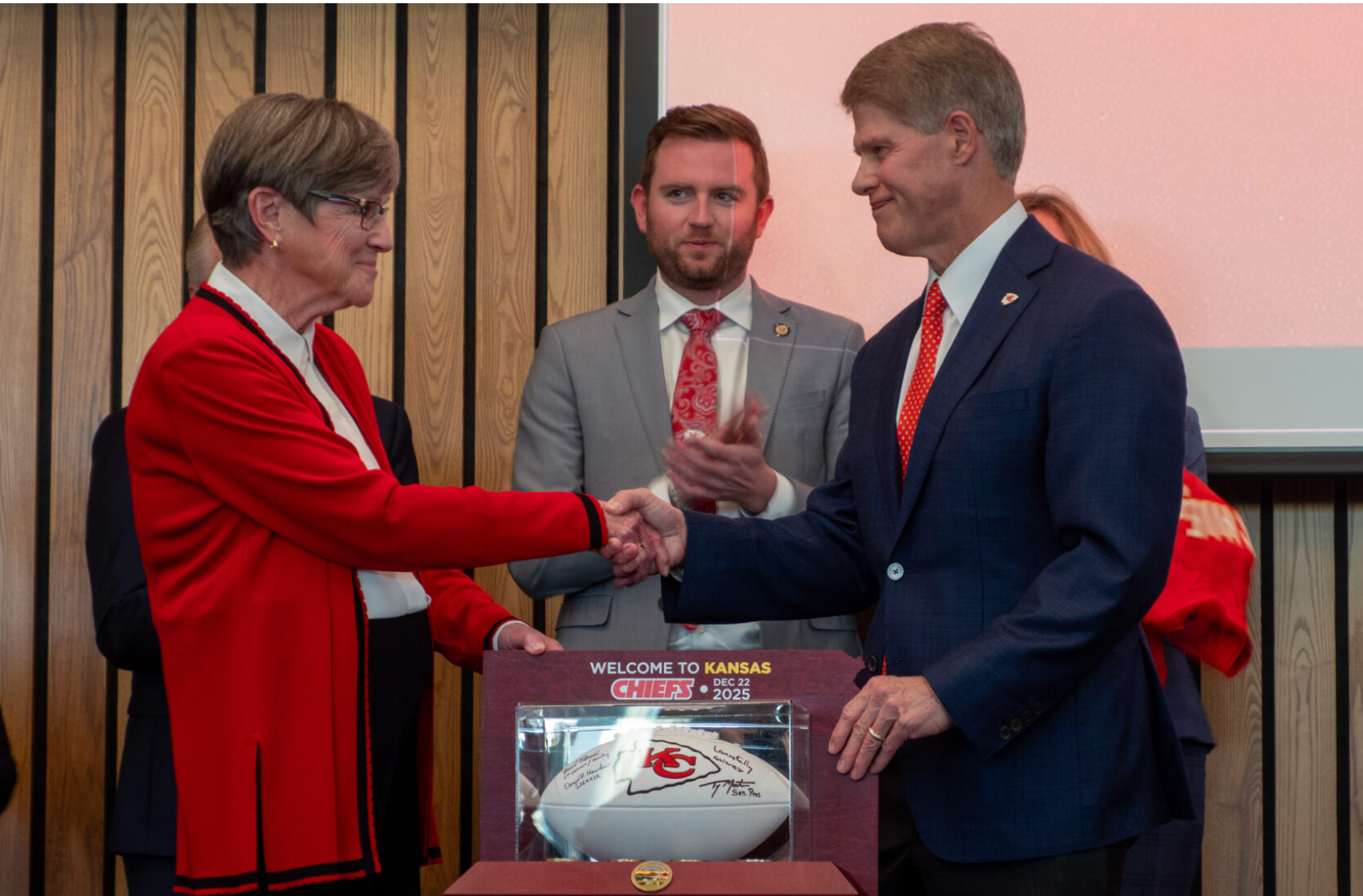
The Kansas City Chiefs stadium proposal operates on an entirely different scale and under a fundamentally different structure. Enabled through special-session legislation designed specifically for major professional sports complexes, the project is estimated to cost approximately $3.0 billion. Public funding commitments could reach up to $1.8 billion, with total public exposure approaching $2.775 billion. Those numbers alone should make clear that this is not simply a larger version of a local redevelopment project.
The structural differences are just as important. Unlike Salina’s defined district model, the Chiefs proposal relies on a layered financing approach that includes STAR bonds along with additional state-directed revenue streams and other public financing mechanisms. The repayment model is not confined to a single, clearly defined district generating its own increment. Instead, it extends across a broader regional footprint, including economic activity spanning Wyandotte and Johnson Counties. This multi-county, multi-tool approach represents a significant departure from the localized, self-contained structure used in Salina.
In other words, downtown Salina’s STAR bond district is a contained, performance-based redevelopment tool. The Chiefs proposal is a state-enabled, multi-billion-dollar, multi-jurisdictional financing platform. Treating them as equivalent is not a serious policy analysis.
This distinction becomes even more important when discussing property taxes. One of the most persistent misconceptions is that STAR bond projects increase property tax burdens. In reality, STAR bonds are repaid from incremental sales tax generated within the district, not from a general increase in property taxes. In the short term, they do not raise property tax rates.
Over the long term, successful projects can help reduce pressure on property taxes by expanding the overall tax base. When underperforming property is transformed into productive property, it increases assessed value, attracts investment, and adds more taxable activity to the community. Once the bonds are paid off, that expanded base remains. The community now has more value supporting the same, or growing, needs.
That leads to a fundamental principle that should guide this discussion: if you want to lower property tax rates, you must widen the base.
There is no realistic path to long-term property tax relief that does not involve growth. Communities that fail to expand their tax base inevitably shift more burden onto existing homeowners. Communities that grow, especially through productive commercial development, spread that burden more broadly and reduce long-term pressure on individual taxpayers.
This is why projects like downtown Salina matter, and it is why future projects like Destination Salina in South Salina matter as well. A project of that scale has the potential to transform underperforming property into a productive regional asset. It can widen the tax base, increase economic activity, and improve quality of life not only for Salina residents but for people throughout central Kansas as well. It can create amenities, attract visitors, and strengthen Salina’s role as a regional hub. Economic development and quality of life are not separate goals, they reinforce each other.
Economist Michael Austin was giving a speech when he was asked about STAR bonds. His response focused entirely on the Kansas City Chiefs’ stadium proposal; a project he has been a harsh critic of. Following the event, I spoke with him directly and explained how the downtown Salina STAR bond district was structured and performed, and I challenged him to identify any specific faults with it. That exchange highlighted an important gap between abstract criticism and real-world results. While his broader critique centered on the Chiefs’ deal, when the discussion turned to Salina’s actual experience, the criticism narrowed considerably. The only concern he raised regarding Downtown Salina was technical, that the original sales tax baseline did not account for inflation and should be adjusted annually. That is a fair point. But it is also revealing. There was no claim that the downtown Salina project failed, burdened taxpayers, or was structurally unsound.
That is the broader lesson. When STAR bonds are discussed in the abstract, the criticism can sound sweeping. But when evaluated against a real, successful local example, the argument becomes much more limited.
Downtown Salina’s STAR bond project and the Chiefs stadium proposal are not the same. One is a $21.9 million, locally controlled redevelopment tool tied to a defined district and repaid by growth within that district. The other is a $3.0 billion, state-enabled, multi-tool, multi-county financing structure with public commitments up to $1.8 billion and total exposure approaching $2.775 billion, extending across Wyandotte and Johnson Counties.
They differ in scale, structure, geography, governance, and financial exposure. They should be debated separately and understood on their own terms.
Communities do not lower property tax burdens by standing still. They do it by growing, by turning underperforming property into productive value, expanding the tax base, and improving quality of life. Downtown Salina has demonstrated how that can work. Future projects like Destination Salina have the potential to build on that success.
If you want lower property tax rates, you must widen the base.
You can send us your opinions/letters to the editor, along with your name, city and or county location to newstips@salinapost.com