


Rolling Hills Zoo
From the Shadows of Wildlife Trafficking to a Second Chance: Rolling Hills Zoo Gives Confiscated Ornate Box Turtles Hope for the Future
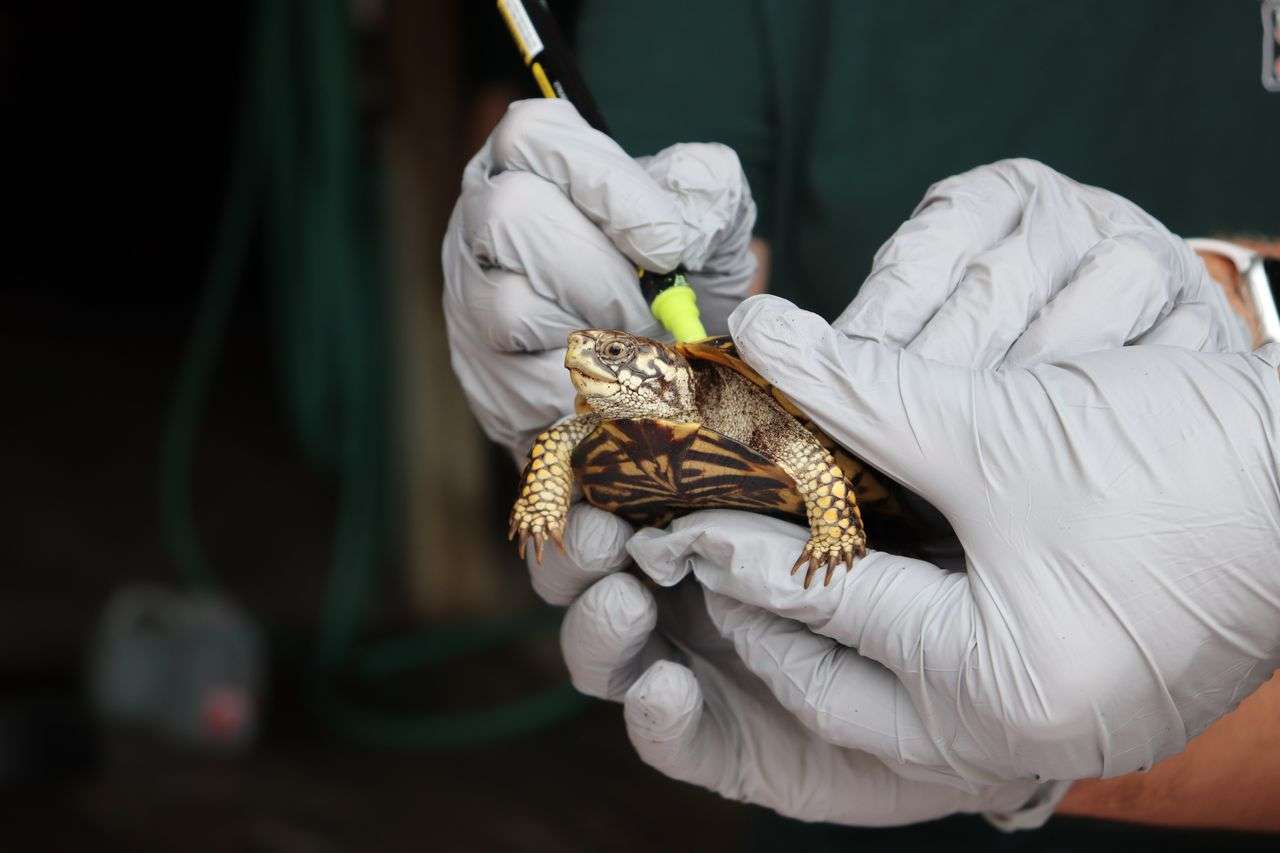
Wildlife conservation doesn't always happen in distant rainforests or on the African savanna. Sometimes, it begins with a phone call—and unfolds right here in Kansas.
In August 2025, Rolling Hills Zoo answered that call after Executive Director Ryan VanZant was contacted by the Association of Zoos & Aquariums’ (AZA) Wildlife Confiscation Coordinator on behalf of the U.S. Fish and Wildlife Service. The request was urgent: Could the zoo provide care for 51 ornate box turtles confiscated from the illegal wildlife trade, where investigators believe the animals were being trafficked and destined for the exotic pet market in Asia?
The answer was an immediate yes.
Within hours, the zoo's animal care team prepared temporary housing for the turtles, which arrived the following day while federal investigators worked to determine where the animals had been illegally collected and how they were being moved through trafficking networks.
Each turtle received a thorough veterinary examination, was individually identified, and tested for diseases that could threaten both the confiscated turtles and native wild populations. Fortunately, all tested negative for the deadly ranavirus. A small number tested positive for other less serious illnesses that continue to be carefully monitored.
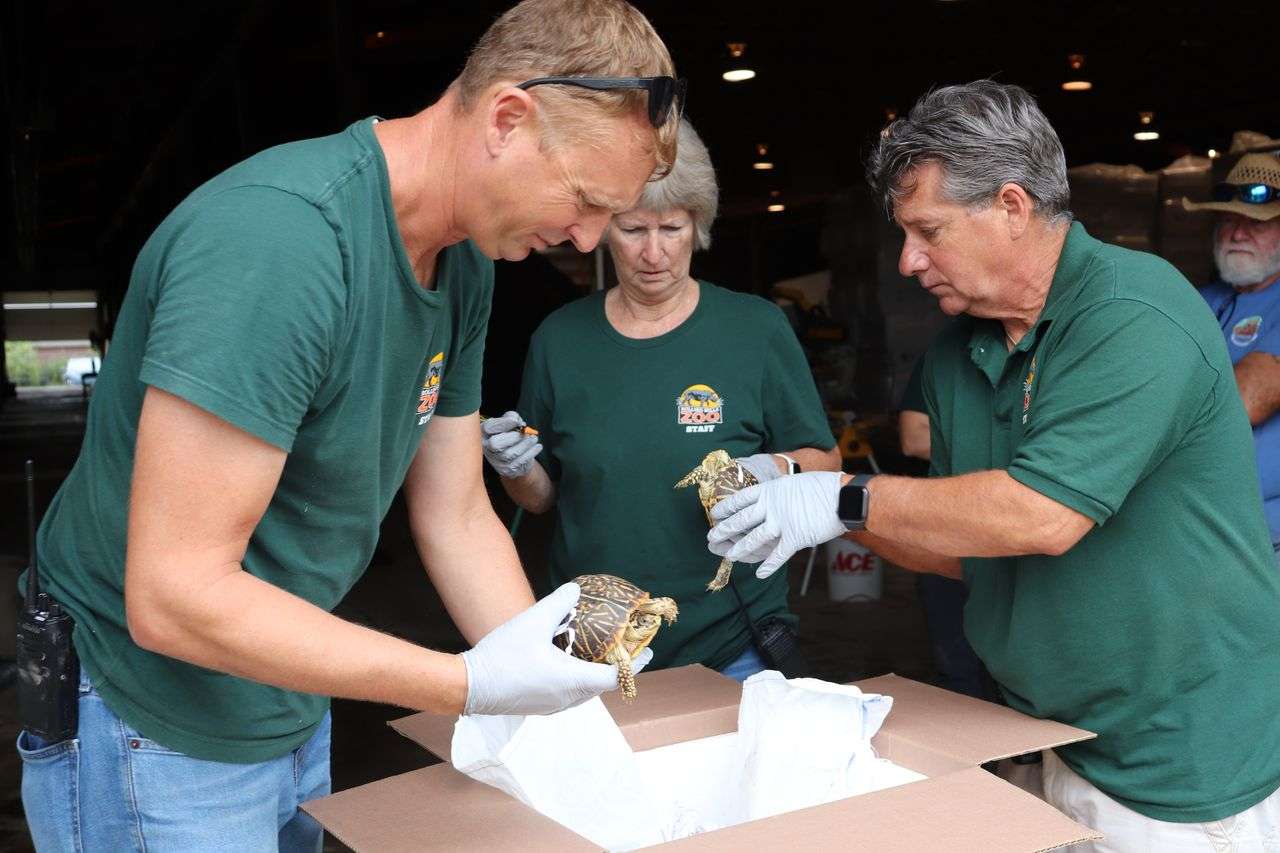
Rolling Hills Zoo later accepted nine additional confiscated turtles in December, one more in May, and an additional 22 in July, bringing the total to 83 turtles under the zoo's care.
Throughout the winter, staff provided daily care that included fresh greens, vegetables, fruit, and worms, while carefully documenting weights, health, and behavior. As temperatures warmed, the turtles were given a much-needed opportunity to return to a more natural environment.
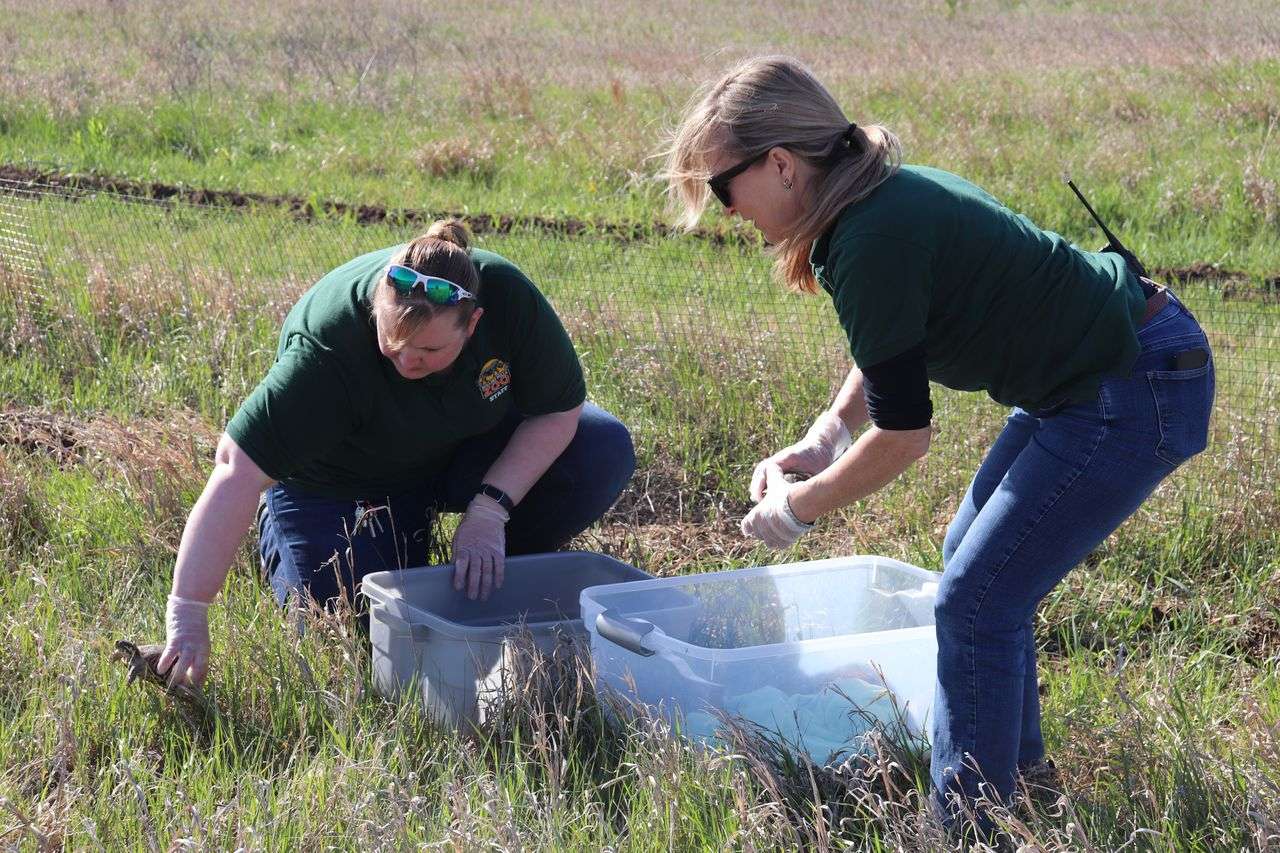
Thanks to Eagle Scout candidate Aidan Deniau-Young, members of Troop 2, and Rolling Hills Zoo staff, specially designed outdoor turtle corrals were constructed on zoo grounds. In April, 49 turtles were moved outside, where they quickly resumed natural behaviors like grazing, burrowing, and exploring native grasses.
Today, 60 turtles live in a10,000 sq. ft. native grass habitat while another 12 continue receiving specialized care to help them regain weight and strength.
Not every turtle survived. Several died during the winter, an unfortunate reality for animals that have endured the stress of illegal capture, poor living conditions, and transport through wildlife trafficking networks.
Despite those losses, the remaining turtles continue to recover.
"The turtles have been incredibly rewarding to work with," said Dr. Danelle Okeson, Veterinarian at Rolling Hills Zoo. "Each one has its own personality and temperament. It's incredibly meaningful to know we've been able to provide them with excellent care, a safe place to recover, and hopefully one day the opportunity to return to the wild where they belong."
That goal, however, is more complicated than simply releasing them.
Ornate box turtles spend their lives within remarkably small home ranges, often no larger than a one-mile radius. Without knowing where these turtles originally came from, releasing them into unfamiliar habitat could reduce their chances of survival or unintentionally introduce diseases into wild populations.
Scientists are currently evaluating disease risks and exploring genetic testing which could help identify the turtles' original home ranges, although that research remains both costly and limited.
Removing even one adult ornate box turtle from the wild can have lasting consequences. The species takes nearly a decade to reach reproductive maturity, and females produce relatively few eggs. Every adult lost to the illegal pet trade, vehicle strikes, or habitat disturbance represents decades of survival and future generations that may never exist.
Kansas' state reptile is among nearly half of the world's freshwater turtles and tortoises now considered at risk of extinction.
The turtles are part of AZA’s Wildlife Confiscations Network, a conservation partnership between the U.S. Fish and Wildlife Service and the Association of Zoos & Aquariums. The program provides immediate veterinary care and temporary housing for confiscated wildlife while law enforcement agencies focus on investigating and prosecuting wildlife traffickers.
Wildlife trafficking is now considered the fourth largest transnational criminal enterprise in the world, behind only drug trafficking, arms trafficking, and human trafficking. The illegal trade threatens endangered species, fuels organized crime, and places countless animals at
risk. In this case, investigators believe the turtles were part of a trafficking operation intended to supply demand overseas, including markets in Asia.
"We often think conservation happens somewhere else," said VanZant. "But sometimes conservation begins with answering a phone call. These turtles remind us that protecting wildlife isn't just something that happens across the globe—it happens right here in Kansas, and with species native to Kansas."
For now, the turtles remain in the care of Rolling Hills Zoo. Their future is still being written, but thanks to the dedication of zoo staff, conservation partners, volunteers, and supporters, these animals are no longer victims of wildlife trafficking.
They are survivors—and symbols of the hope that conservation can provide.