


The views and opinions expressed in this editorial article are those of the author and do not reflect the official policy or position of the Post or Eagle Media. The editorial is intended to stimulate critical thinking and debate on issues of public interest and should be read with an open mind. Readers are encouraged to consider multiple sources of information and to form their own informed opinions.
By: BOB LEWIS
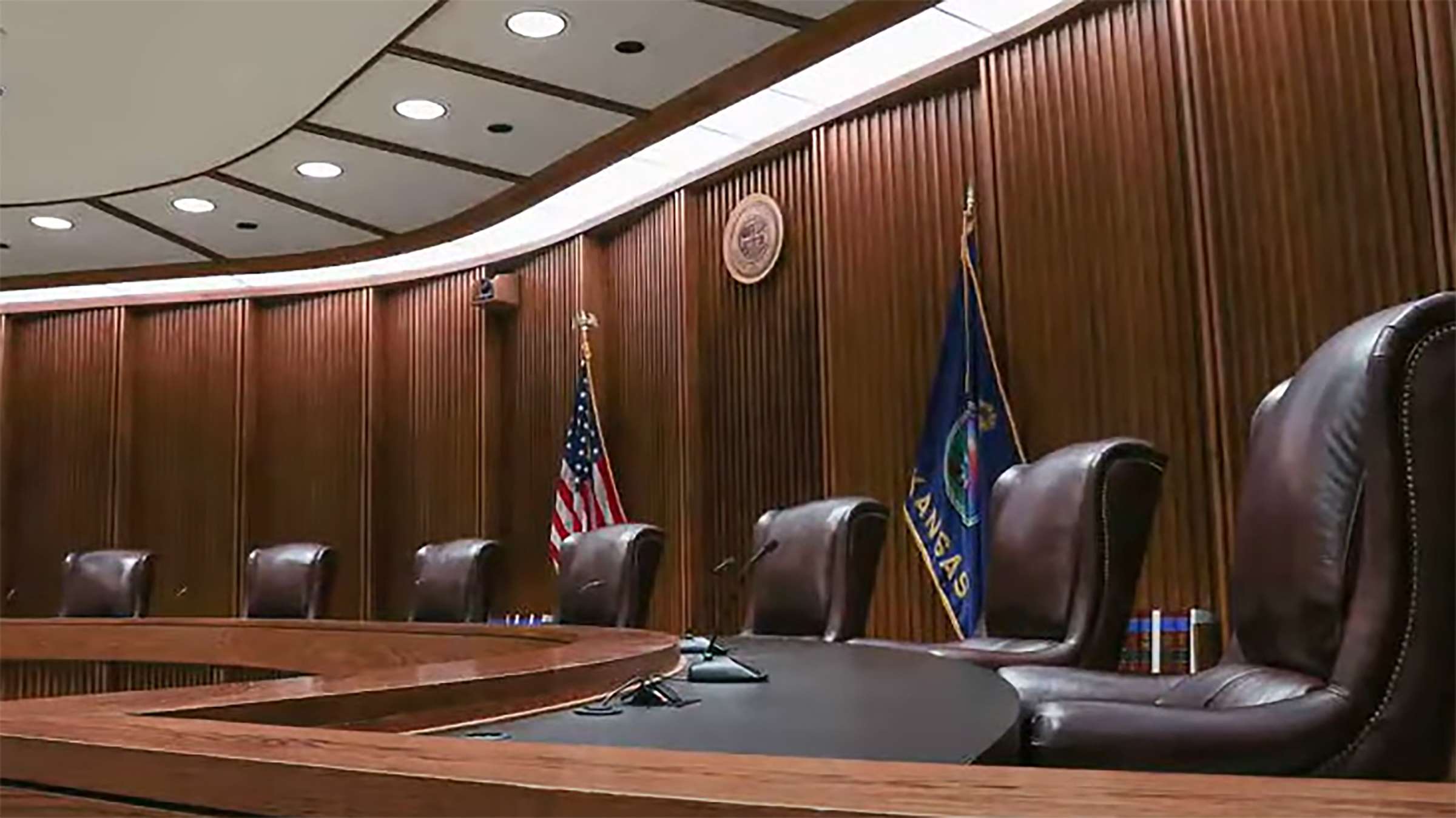
The most important issue on the August 4 primary ballot is not a candidate, but a constitutional amendment that would give back to Kansas voters a voice in who sits on our highest court.
Today’s selection system excludes voters and violates basic principles of fairness, transparency, and self-government.
It works like this -- A nine-member commission, comprised of lawyers and political appointees, selects three finalists and the governor chooses one. Lawyers are the majority of the commission, and those lawyers are chosen by other lawyers in a secret-ballot election.
How did such an undemocratic system take root in Kansas, a state long associated with expanding freedom and suffrage?
For Kansas’s first 95 years, voters elected justices, and the system worked well. But in 1956 a political scandal known as the “triple play” brought change. After his defeat in his reelection bid, governor Fred Hall urged his friend, the chief justice, to retire early, which he did. The next day, Hall resigned as governor, and on the third day his lieutenant governor, who had become governor on Hall’s early resignation, appointed Hall to the bench. Voila – Hall moved from the executive branch to the highest judicial branch position without voter input.
Kansans were outraged at being excluded from the selection process. Yet the legislature’s “solution” failed to address the outrage; rather it constitutionalized the problem, permanently excluding the voters and entrenching the same insider control that outraged the voters – a commission of nine political insiders—five of them lawyers.
The system also creates a conflict: lawyers on the commission often appear before the justices they put on the court.
Quite simply this was a power grab by lawyers, who then controlled the legislature. It is rooted in the discredited notion that voters cannot be trusted and must be governed by experts; the same thinking that spawned the administrative state that now gives unelected bureaucrats enormous power over every aspect of our lives.
These unelected justices are not performing well, and the Kansas’s Supreme Court is among the most overturned high state courts in the country. In the last 20 years, the Kansas Supreme Court has been reversed on five important cases involving the death penalty and immigration fraud. In one case, the U.S. Supreme court slammed the Kansas court’s reasoning as “untenable”, “beyond the pale”, and based on “extravagant speculation”.
My review of the commission’s 2025 selection process reveals the flaws in the system – showing it to be neither merit-based, nor apolitical. Brant Laue was by far the most
qualified candidate, having served as general counsel to two governors and as solicitor general in the AG’s office. Yet none of the nine commissioners ranked him among the top six applicants. The nominee ultimately selected by the governor was a Kansas City lawyer with a narrow area of practice and with no judicial or government experience. (For details of my review see Merit-based Kansas Supreme Court selection really political | Kansas City Star).
The current court also lacks geographic balance. All seven justices live in the northeast quadrant of Kansas—Douglas, Shawnee, Johnson, or Wyandotte counties. None lives in the western or southern half of the state. That isn’t surprising since most political insiders and lawyers live in the northeast quadrant of the state.
In brief, ordinary Kansans have no influence over the selection of the justices.
As a lawyer for 39 years, I have practiced in many courts around the county, and as a state representative for four years, I have studied our courts closely. Kansas is out of step. Election of justices is the most common system; and no state gives lawyers as much control over selection as Kansas does.
Kansas should return to its roots and let the people choose those who control the third branch of government.
Let’s take back our supreme court. Vote YES on August 4.
Bob Lewis is an attorney and representative for Garden City in the Kansas House of Representatives.