


The views and opinions expressed in this editorial article are those of the author and do not reflect the official policy or position of the Post or Eagle Media. The editorial is intended to stimulate critical thinking and debate on issues of public interest and should be read with an open mind. Readers are encouraged to consider multiple sources of information and to form their own informed opinions.
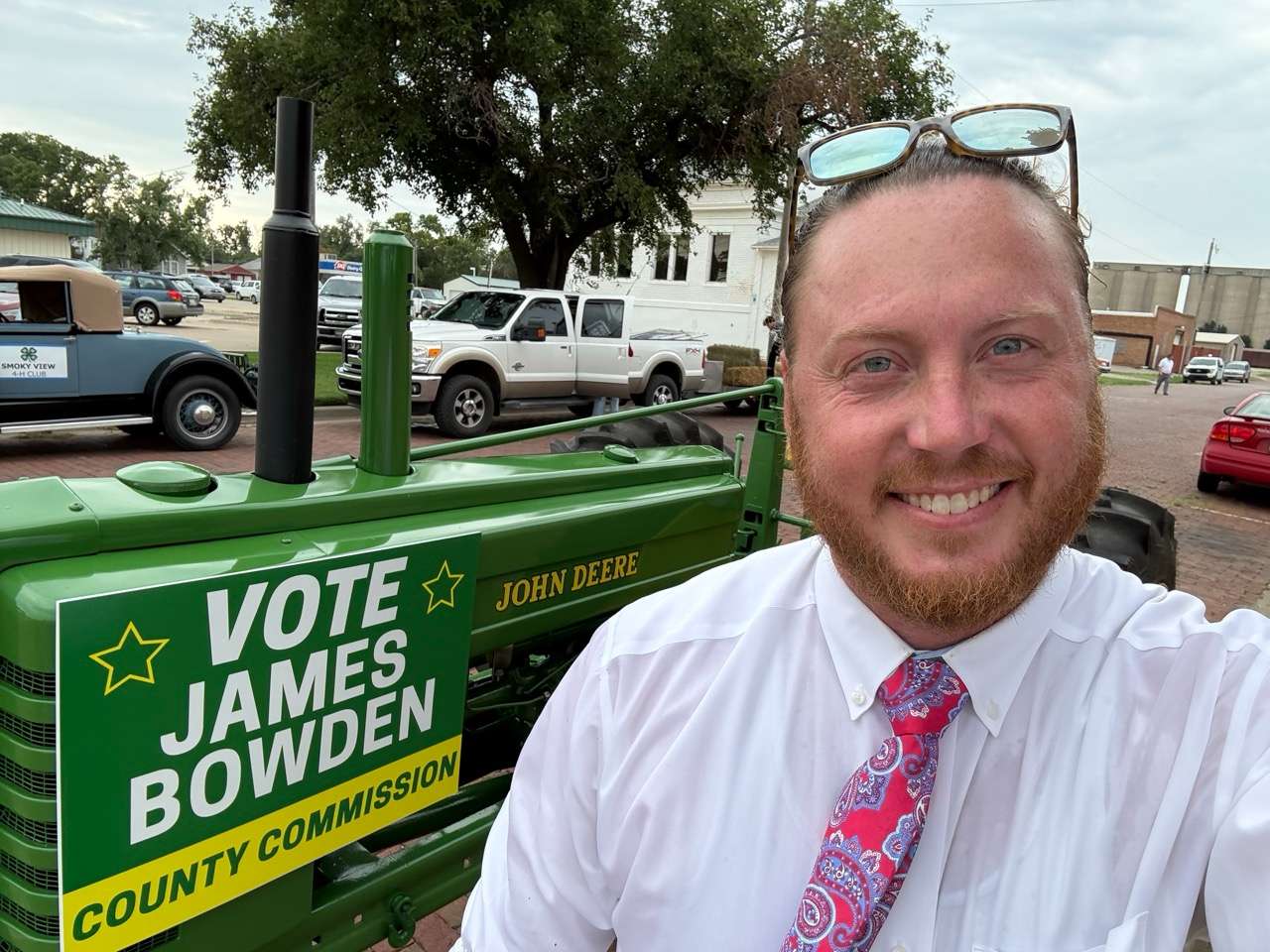
By: JAMES BOWDEN
I spent the last 5 months getting signatures to complete a nomination petition for candidacy to become an unaffiliated candidate for the 2026 County Commission election cycle. This arduous task lasted the whole spring and summer; 100 degree heat, sweat soaked clothes, and a thunderstorm blowing in on occasion was not uncommon.
Though the weather varied, It was pretty casual at first, only Sundays, but as the deadline for filing got closer, the looming fear of letting down my constituency started haunting me.
Did I let down a whole group of people counting on me to run?
Looming questions like “Can I follow through with the promise I made back in March that I was running as an independent to bridge the gap between the national partisanship eating our local communities from within?"
Anxious solutions like, “I could just pay the fee and run a partisan race focused on being unlike the other guys and willing to listen to both sides," but that felt disingenuous. I wanted to run because I believe we have things in our community that shouldn’t be portrayed as partisan, so I decided to run unaffiliated.
Four hundred and sixty-five. That is the number of signature spaces I turned in to the Saline County Election Office. Granted, not all of the spaces were filled in, and some were even possibly invalid, but 31 pages of effort were dropped off at their office with the intent to become a mere candidate for the coveted position of county commissioner. The state election office requires a potential candidate to get 3% of the registered voters in their district to qualify, which comes out to 293, or a total voter registration of 7,325 for country commission district #1.
My treasurer and I even went back out to get a couple of extra pages, “just in case,” because, as we’ve seen before, not every signature counts. Some may be registered at an old address, some may be excited to sign and forget they aren’t in your district, and some may even just write the ZIP code where the date should have been.
Whatever the case, when I was told that I had reached the qualifying number for my district, I asked, “How many were invalid?” I was told that the election office just stops when they reach the number, but it was mentioned that I only had two pages and change left before I was out of potential registered voters to source from. A close call, but I made the cut. Now, back to focusing on the issues.
There are basic needs that everyone requires that can only be delayed by partisan rhetoric, a chronic issue that has destroyed our ability to rationally problem-solve. Food, water, and shelter are at the very foundation of the necessities required to survive, and those should be the things we address first and foremost.
Not only should we address those concerns, but we need to approach them with seriousness, and address them thoroughly.
Politicians are elected to represent their community’s interests and the investment of the taxpayer, and they need to reflect their constituencies' desires in their actions and what’s best for the future of the communities they represent.
During the lead up to my signature submission, I was approached by a politically active community member one day at our local Menards. “James, come over here for a second.” she said. This was back in June. “Hey, are you running for County Commission or what?” I explained that I was, but I couldn’t be officially listed as a candidate until all my signatures were turned in. She said, “Can’t you just pay the fee?” I said I couldn’t because unaffiliated candidates are required to fill out a petition for nomination. This is the only option for unaffiliated candidates. It’s either fill out the petition or run a partisan race. She was referencing the partisan candidate’s ability to pay a 1%-of-salary filing fee and a $50 filing fee, a grand total of nearly $270 to automatically enter into the Saline County Commission race. She scoffed and said, “Well, I don’t like that!” and I said, “Well, I don’t like that either, but that’s the way things are.”
And that, to me, is an obstacle to democracy.
We’ve been fed a line that all we have to do is vote, and that we not only have the right to elect our representatives but also have the right to represent our communities. What seems like a simple task of meeting your neighbors and getting a few signatures turns out to be a legitimate concern for representation in our community.
If I, an able-bodied white man with a somewhat flexible schedule and no kids, can have trouble getting signatures, how can anyone with a differing appearance or opinion forge a path away from the two-party system, parties that are themselves deeply flawed, and become a viable candidate for an election?
How can anyone who’s physically handicapped go to the largely inaccessible neighborhoods and knock on doors?
Is there money or time for the single mother to hire a babysitter and get the signatures required?
The list goes on and on for reasons why people are unable to represent the communities they live in and have no choice but to stick to the party system they are presented with. We can not pretend to understand a deeply ingrained perspective of a person or life that we ourselves have not lived. We can only represent our communities through the shared knowledge of the voices who speak up from within it. Salina is not a homogenous place. Even on one block we see a full spectrum of humanity. Why have we made it so difficult for our communities to represent themselves for what they are: a messy mix of red hats, blue hair, welcome in, leave me alone, and can I just have clean water and a bite to eat?
But why not just pay the fee and join the party?
Even within partisan politics, our representatives are unable to represent their communities the way they believe they should because of how the parties “play as a team.” We saw in the attempted redistricting of the Kansas congressional maps just how a party treats dissenting voices, even from within.
Clarke Sanders and Steven Howe, Republicans who voted against redistricting, were both pulled from their respective committees (KSAL) as punishment for straying from the pack (PAC?).
How can we continue to let a system that is clearly not representing the people it claims to represent continue?
Whether we want to or not, our government keeps putting obstacles in the way that puts us further and further from having true representation for our community without the baggage of the two party system. If Kansas wants to be represented by a candidate that represents their communities, we have to consider that an unaffiliated candidate is more likely to be able to make a decision that isn’t biased in party ties, but carries the weight of the community that they are representing.
In a world that can clearly see there are basic needs to be addressed, can we take a step toward considering who isn’t being represented?
Can we consider that we have groups of people who can’t go door to door because it is a legitimate threat to their safety?
When are we going to step back from this chronic grind of fighting our culture wars while ignoring basic needs?
We can’t do this without everyone on board, because every family is made up of all of these groups. We have to consider ourselves as more than identity politics. We have to consider ourselves as human beings first, and that we share a desire to live in a world that isn’t always fighting against a nebulous boogie-man, but one that provides clean water, quality food, stable housing, and the opportunity to pursue a passion that enriches their lives.
In a political landscape that constantly reminds us of the importance of local elections and participating in them, why are we tolerating undemocratic barriers?
If we truly want to pride ourselves on saying everyone has a seat at the table, then we need to make sure that not only are the seats open to other voices within our community, but also remember to unlock the door to let them inside in the first place.