


By: NICOLAS FIERRO
Salina Post
Saline County Commissioners have denied a proposed Battery Energy Storage System (BESS) to be established within county limits, after a 4-1 supermajority vote.
This follows after the Saline County Planning Commission voted 8-0 on November 25, 2025 to recommend the proposed project to be presented to County Commissioners.
The proposed BESS was slated to occupy a leased area of 15 acres, with the facility occupying less than 10 acres of the 40 acres of the subject parcel on the SW corner of McReynolds Road and Simpson Road, Section 28, Township 15, Range 2.
More specifically, the proposed location was about 2 miles west of Southeast of Saline High School and also near the Smoky Hill River.
In response, landowners within the required notification area submitted a valid protest petition signed by more than 20% of affected property owners, triggering an appeal under Saline County zoning regulations and requiring the matter to be heard by the County Commission.
The petitions received represented approximately 80 parcels, equivalent to more than 3,896 acres. This represents more than 31% of the total notification area of approximately 12,231.56 acres.
The signatures of the petitions were received on December 9, less than a month after the planning commission's approval of recommendation.
In order for the proposed BESS to be denied, there needed to be a supermajority vote within the County Commissioners of either 4-1 or 5-0.
On Tuesday, January 6 County Commissioners voted 4-1 and therefore the denial was put in place.
Before the denial: Background of the BESS
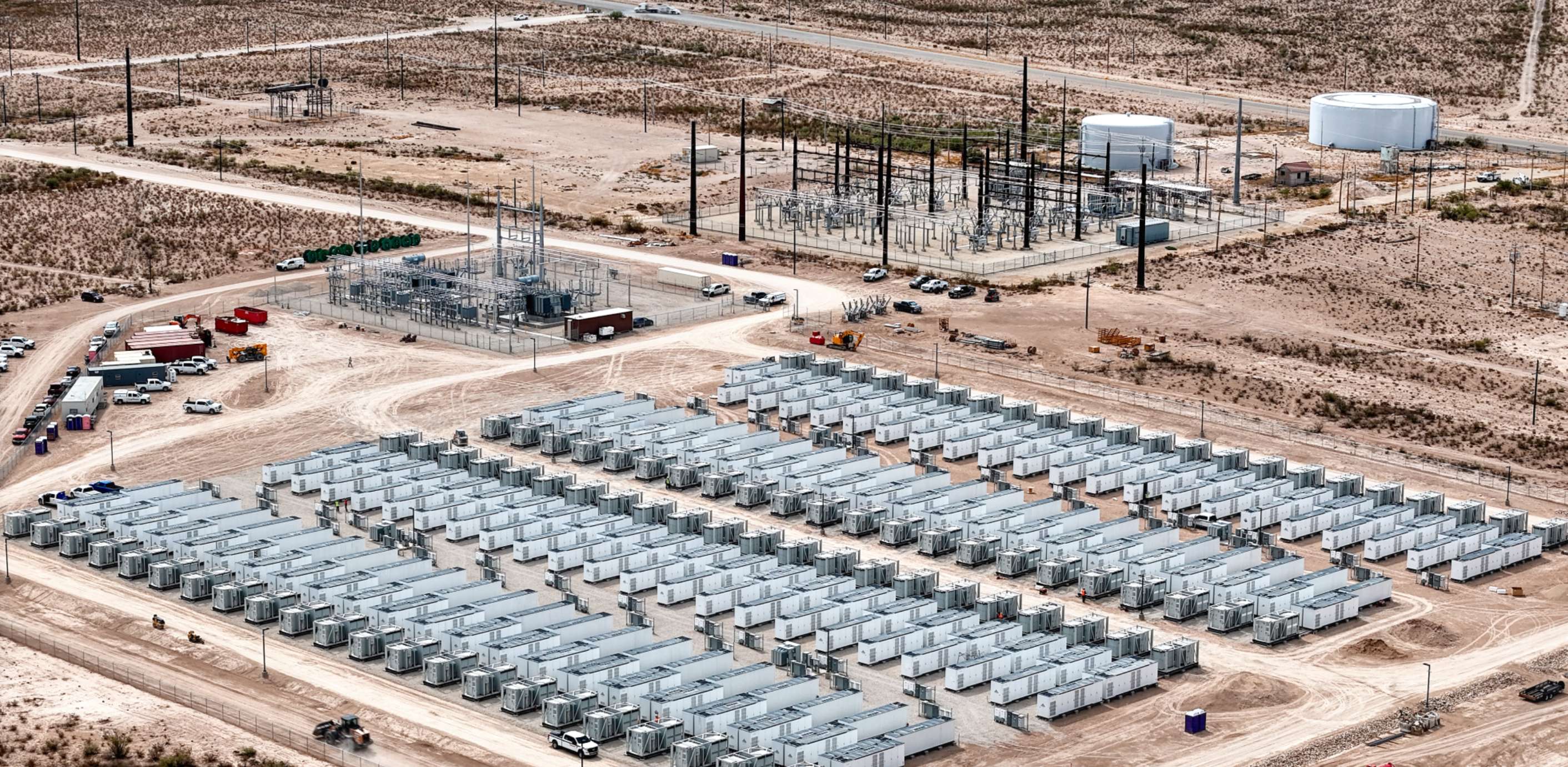
This started in 2023 when Mountain Peak Energy Storage, LLC submitted a Conditional Use Permit (CUP) application, to request approval of a new Conditional Use Permit from Saline County to develop a 350-Megawatt (MW)/ 1400-Megawatt Hour (MWh) Battery Energy Storage System (BESS) pursuant to the County’s BESS Ordinance.
The facility would function as a supplemental power for the grid during peak hours of power usage to reduce the possibility of blackouts during these periods.
The facility may also provide power during low-output phases of alternative energy sources.
The area the BESS would have been placed on, would be on agricultural land, which would prevent any sort of farming to occur there.
Moreover, no taxpayer dollars would be used for the construction of the BESS, as the applicant would have funded the project.
Plus Power is the main company (out of Houston, TX) that develops, owns, and operates large-scale battery energy storage projects, such as the proposed Mountain Peak Energy Storage facility or BESS. Mountain Peak Energy Storage is the name of the specific project Plus Power, which uses "Mountain Peak Energy Storage, LLC" as a project entity, but the parent company is Plus Power.
Benefits of the BESS
During the Saline County Planning Commission meeting on November 25th, Josh Svaty of Plus Power explained that this facility will store energy till it is needed at peak times to help lower electric bill costs and during outages.
Christina Hoffman of Plus Power went over the application and regulations, letting the Planning Commission know they are abiding by all of the guidelines set forth, which the Planning Commission agreed the did before approving recommendation.
They provided a slide show presentation to help explain the project, the need for this kind of storage and how it meets the guidelines. They also proposed conditions they would like to be added or changed.
According to the Planning Commission, this project would have utilized state-of-the-art battery technology to store electric energy supplied from the Evergy Summit Substation (via the electrical grid) during periods of excess energy generation at times of low demand, allowing that energy to be redeployed to the grid during times of high demand or emergency needs, enhancing the reliability and stability of the regional grid and providing a tool to help manage delivery of energy to the residents of Saline County and the local region.
Redeploying energy in this manner avoids using higher-cost energy generation during periods of high demand, reducing energy bills for Kansas consumers.
Other benefits include:
- Homeowners can store excess energy for later use, improving energy independence and managing utility bills.
- BESS supports grid balancing, peak shaving, and regulating frequency and voltage, enhancing grid reliability.
- BESS effectively stabilizes renewable energy sources like wind and solar, enabling continuous power even when conditions aren’t optimal for generation.
Concerns from the public and County Commissioners
Ever since the public was notified about the BESS in 2023, community members were not for the installation.
Some comments from the public and even those housed near the proposed facility raised concerns about safety, environmental impact, insurance, concerns on the "let it burn" approach, emergency response and how the county would benefit from it.
The "let it burn" approach is for when a lithium battery in the BESS catches on fire, and the only way to extinguish is it to literally, "let it burn."
Moss Landing, CA incident
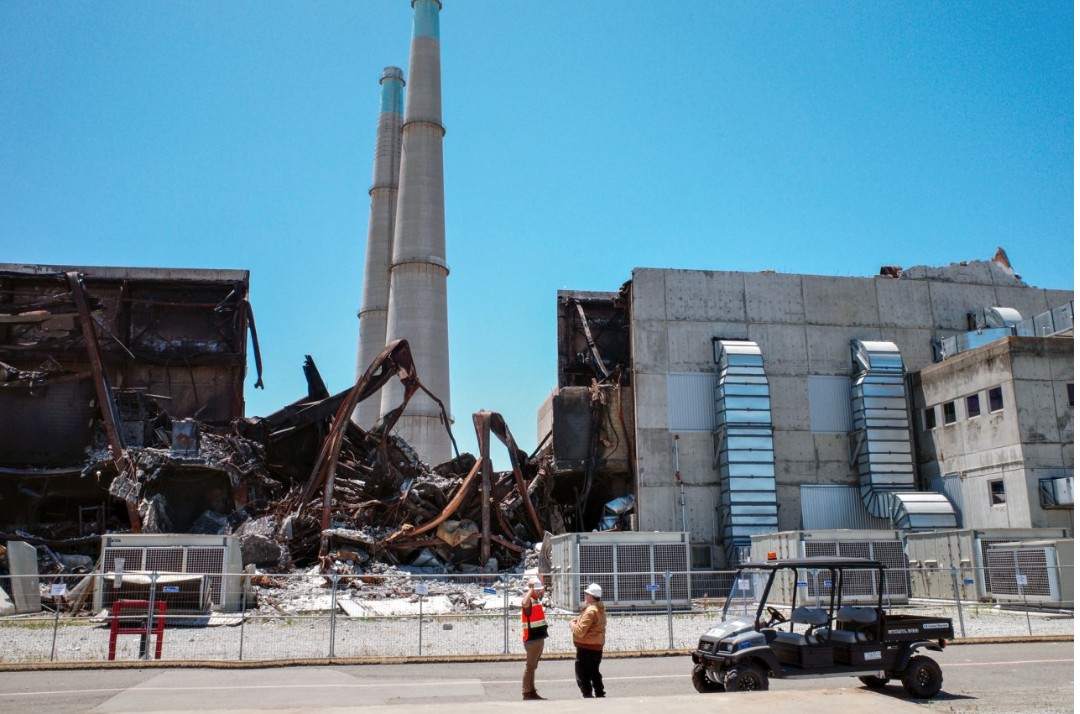
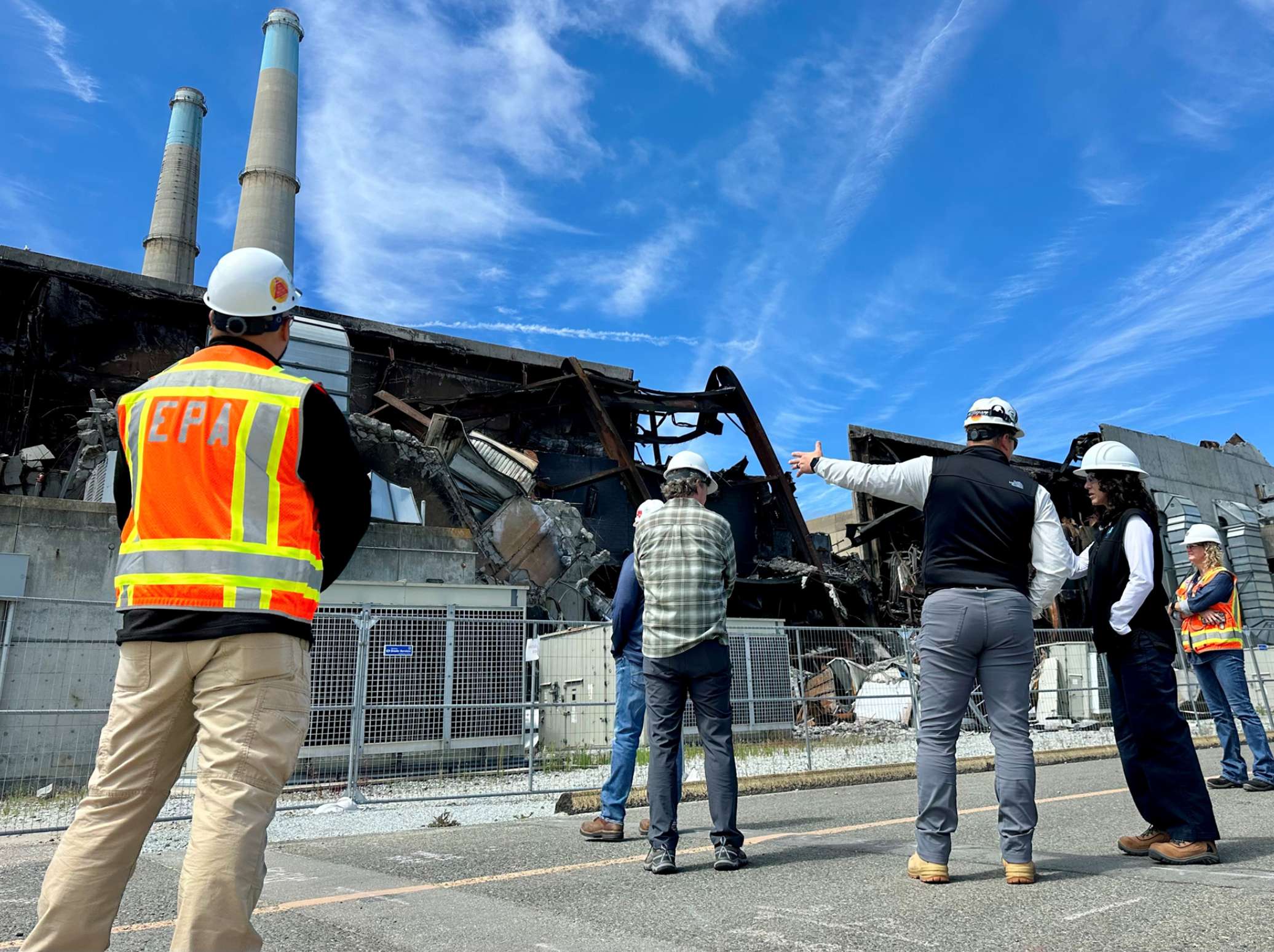
On January 16, 2025, Moss Landing, CA had an incident where a fire broke out at Vistra’s 300-megawatt battery energy storage facility. The facility contained approximately 100,000 lithium-ion battery modules, of which about 55% were damaged in the incident. The fire continued until January 18 and experienced a flare-up on February 18.
Residents in the area reported of feeling ill after the incident. People voiced concerns that the fire polluted air, soil and water with dangerous toxins.
According to EPA, lithium-ion battery fires can produce hydrogen fluoride and other flammable or toxic gases.
There were no reported fatalities or major injuries after the incident.
Commissioners Joe Hay, Rodger Sparks, Annie Grevas and Monte Shadwick also voiced their concerns as well, as they voted against it, with the exception of Commissioner James Weese.
"If I got a hundred of my constituents that have said they do not want it, and I have had nobody except the people proposing it say they want it, you know those people voted me in to represent them and that is what I am going to do," said Hay. "I am going to follow what the people voted us in to do."
Shadwick was also concerned about the project and mentioned he could not recall a time where he overturned a recommendation from the planning commission, but this time he differed.
Sparks commented on the statement from the staff recommendation that said "Because Battery Energy Storage is a new use in unincorporated Saline County, and the technology is still in its infancy, there is nothing to compare it to that would lend staff to make a recommendation at this time,” which led him to not want to approve this project.
Grevas praised and appreciated the public for their comments and feedback from this proposal. She added that she leaned more toward not wanting to move forward with this project after the 20 minute executive session.
Weese also stated he had alot of concerns with this project as well. As a former firefighter, he was mostly concerned about fire safety. However, Weese voted in favor for the installation of the BESS.
BESS data presented
Member of the Planning Commission, Paul Finnell shared data about the BESS with the Salina Post.
Finnell presented data that accumulated 900 BESS installations, which only 4 of those had an incident in 2025 - (4/900)*100= 0.45% risk of a fire.
One of those incidents covered the Moss Landing fire.
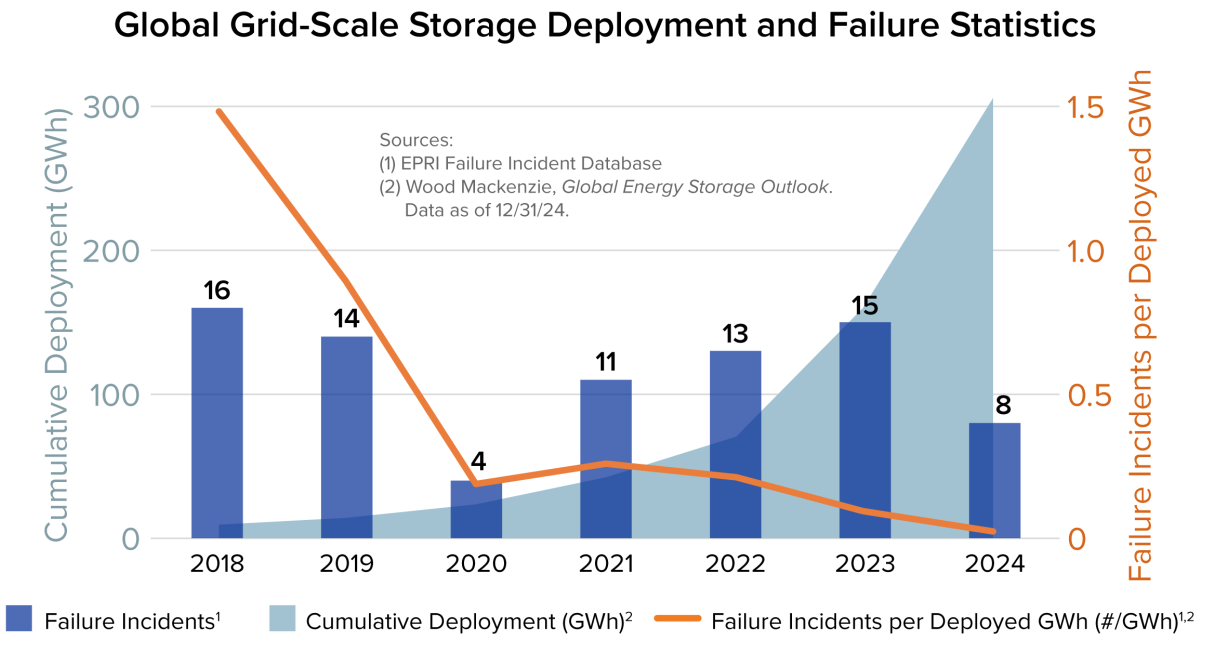
A bar chart from the BESS Failure Incident Database compared the number of failure incidents over time against the deployment of BESS. The chart showed the failure rate per cumulative deployed capacity from 2018 to 2024.
According to the chart, it showed the global installed capacity of BESS has dramatically increased over the last five years, and while failure incidents continue to occur, the overall rate of incidents has sharply decreased from 2018 to 2024 by 98%.
As a result of the denial, the proposed project may not proceed under the submitted application. The applicant of the BESS however, may now file a new conditional use permit after one year.
You can find more information about the appeal and CUP 25-09 proposal at the Saline County Commission January 6, 2026 agenda here.