


MARION, KAN. -
The story of the 2023 police raid on the Marion County Record is coming to HBO, bringing renewed attention to an incident that sparked national debate over press freedom and the role of local government.

Newspaper publisher Eric Meyer said the documentary will premiere on HBO at 7 p.m. Dec. 1, followed by availability on the network's streaming platform.
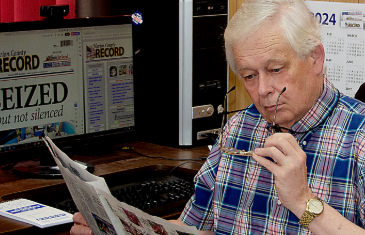
Meyer said he has watched the documentary several times and was pleasantly surprised by the finished production.
"I had no editorial control and make no money off this," Meyer said. "I saw it right before it aired at Sundance."
"It was not what I expected, and it was better than I expected," he said. "We start out being the bad guys in the show, and then it shifted gears."
The documentary tells the story through the perspective of a former newspaper employee who was not working at the Record when the raid occurred.
"It is an interesting cinematic look and an interesting exercise in storytelling," Meyer said. "It is entertaining."
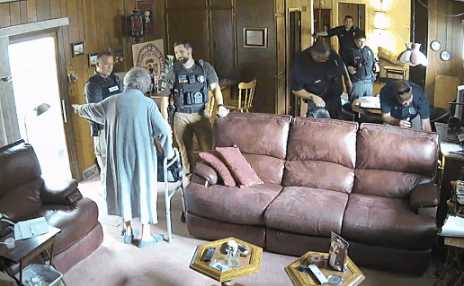
The August 11, 2023, raid involved Marion police officers seizing computers, cellphones and other materials from the newspaper office. Officers also searched Meyer's home, where his 98-year-old mother, Joan Meyer, lived.
The searches followed reporting involving local restaurant owner Kari Newell and allegations of identity theft and unlawful computer use. The search warrant was subsequently withdrawn, and the seized property was ordered returned.
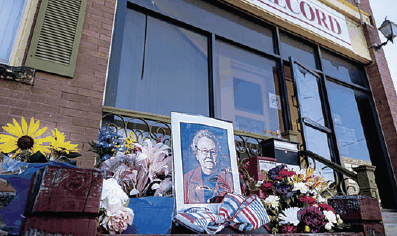
After law officers seized items from his personal home, his mother, Joan Meyer asked officers repeatedly to get out of ther house. Joan Meyer died not long after the raid.
Meyer and some employees sued over the raid and won. In total, millions have been awarded to Meyer and some of his now former employees and to the Joan Meyer estate.
Meyer says this story is not about money.
Meyer said he hopes viewers take away a lesson about accountability and the importance of questioning decisions made by public officials.
"I hope people take away that anybody anywhere can hire a bad apple," he said. "Marion hired a police chief many thought was not good."
He said the incident also demonstrated how important checks and balances are in government and the criminal justice system.
"There's checks and balances, and none of that worked. Everybody just kind of let this happen," Meyer said.
He believes elected officials and those working in the criminal justice system have a responsibility to question decisions rather than simply follow someone else's direction.
"I hope people don't get that this is a bad place to live," Meyer said. "Mostly it's well-meaning people who probably knew better than to do this, but it happened."
He said the magistrate judge, county attorney and others involved should have taken more time to examine the circumstances before allowing the searches to proceed.
"Nobody stood up and said, no, let's not do this," he said.
Meyer said he will not receive proceeds from the documentary. Under his agreement, he receives a one-percent interest, which he said will be donated to the Kansas Press Association.
The newspaper received some money through settlements, Meyer said, but also experienced financial losses.
Investing in the future of community journalism comes next.
While the documentary revisits the events in Marion, Meyer said he is also focused on the future of community newspapers and finding ways to bring more journalists into small-town newsrooms.
He said two charitable initiatives are being developed to support journalism in Kansas and monies from settlements are going to that effort.
One will establish a fellowship for new journalists, giving them an opportunity to work in a small-town newspaper environment.
The other initiative will help veteran or former journalists return to community newsrooms and share their experience with younger reporters.
The program would provide housing and a small stipend for experienced journalists to spend a month working at a Kansas newspaper with a circulation of fewer than 4,000.
Meyer envisions bringing three or four experienced journalists together with a younger fellowship journalist in the same newsroom.
"The biggest problem is not advertising," Meyer said. "Locally owned businesses still send money to newspapers. Just not as much as before."
He believes many small community newspapers remain viable but need qualified journalists willing to work in smaller communities.
"Small papers are not dying per se. They are wanting good journalists to come to these small towns," he said. "We want to give people the opportunity to do good journalism. We just need the people."
The goal is to create an environment where experienced journalists can teach newer reporters while also learning from them.
Meyer said the effort is intended to strengthen journalism throughout Kansas and preserve the importance of local reporting.
He also said the ongoing litigation with the City of Marion could provide additional resources for the fellowship effort. Meyer said money from that litigation would go toward helping young journalists work alongside experienced reporters.
A return to grassroots journalism.
Meyer believes one of the biggest challenges facing communities today is a growing lack of trust in news and a tendency for people to rely on slogans and emotionally charged social media discussions rather than factual information.
He describes journalism as an alternative to social media, where people often express opinions without accomplishing anything.
"I call journalism anti-social media," Meyer said. "People spout off and nothing gets accomplished."
He said community journalism should focus on practical issues that affect residents, including holding local government accountable and finding solutions to everyday problems.
"So let's cover the pothole. Let's see how local government can get the pothole fixed," he said.
Meyer believes local newspapers provide an important connection between residents and their elected officials.
Rather than simply criticizing public officials online, he encourages residents to communicate with them, invest in journalism and seek reliable information.
"Communicating rather than just shooting salvo after salvo at people," he said. "That requires facts and real information."
He acknowledged that sometimes the information journalists uncover is not what people want to hear, but said providing accurate information is essential.
"Nothing gets done because people on social are just talking in an echo chamber," Meyer said.
He also emphasized that large media organizations cannot provide comprehensive coverage of every community in Kansas.
"It would be nice to say the big media can cover everything, but they can't cover 105 counties," he said.
For Meyer, the future of journalism depends on rebuilding the connection between local newspapers and the communities they serve.
"Democracy works, and we are trying to fix some issues," he said.