


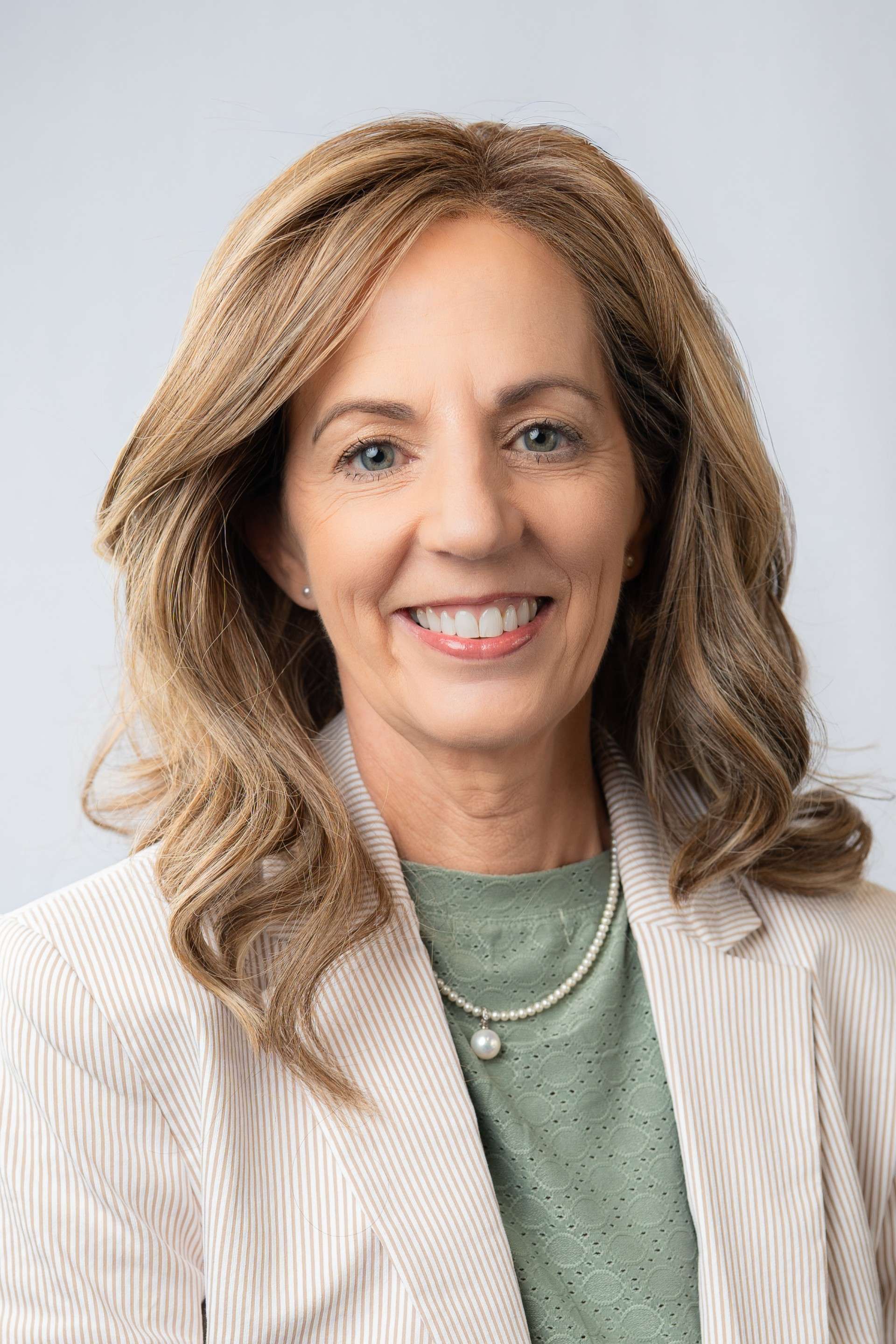
By TISA MASON
FHSU president
In the quiet hours before the Kansas sun touches the horizon, Gabrielle Davis is already immersed in her studies. It’s 5 a.m., and while most of the neighborhood is still asleep, Gabrielle is navigating the complex anatomy and pharmacology content she must master in the Bachelor of Science in Nursing (BSN) program.
Across the state line in Arapahoe, Nebraska, Janine Van Niekerk, serving as a Licensed Practical Nurse (LPN) in a rural nursing home, is balancing a similarly delicate act.
Janine and Gabrielle are pioneers. As members of the inaugural BSN hybrid (combined on-campus and online) program cohort at Fort Hays State University, they represent a shift in nursing education—one built for people with a deep connection to their hometowns and families, coupled with a purposeful commitment to ensure their rural communities have access to highly trained, compassionate nursing care.
For both women, nursing is a profound calling rooted in an ethic of care.
Gabrielle, an LPN at the HaysMed walk-in clinic, represents the deep roots of Kansas healthcare. A third-generation nurse, she was inspired by her grandmother, mother, and an uncle, a physician. “I knew from a very young age that I wanted to be a nurse,” Gabrielle says. “Especially watching my mom. She is the nurse that I aspire to be.”
Gabrielle’s resilience was forged during the COVID-19 pandemic. While still in high school, she completed her courses via Zoom and then worked until 10 p.m. at a nursing home in Atwood to help cover staffing shortages. She continues to work there one weekend a month because of the deep bond she shares with the residents. “I don’t want to give up my residents,” she says. “A lot of them I call grandparents. They consider me their grandchild.”
This same dedication drives Janine Van Niekerk. Originally from South Africa, the 45-year-old mother of six now lives in a rural area of Nebraska.
For her, the FHSU hybrid program provided a way forward that seemed almost tailored to her life. She began her general education courses while still living abroad and was moved by the university's support during her transition back to the States. “Everyone was so helpful in helping me register, so patient in going through my credits,” Janine recalls. “I knew FHSU was the right choice.”
The stories of Janine and Gabrielle are individual threads in a much larger tapestry. Fort Hays State University serves as a primary engine for the Kansas nursing workforce with a simple priority: getting nurses to rural Kansas. The university doesn’t just graduate students; it delivers them where the need is most acute.
Currently, approximately 70% of FHSU BSN graduates and more than 90% of family nurse practitioners go straight to work in rural communities. With 80% of total nursing graduates staying in Kansas, FHSU is a proven, high-yield investment in our state’s future.
Beyond the classroom, FHSU serves as a regional hub for healthcare excellence, providing guaranteed admission to Kansas community college students and serving as a vital training ground for HaysMed, EagleMed, and 25 critical access hospitals.
The hybrid BSN program is the latest tool in this mission, combining the convenience of online learning with the rigor of on-campus clinical clusters. For Janine, whose husband travels for work, this flexibility is a necessity. “For me, time is vital,” she says. “The hybrid gives me more flexibility with my schedule and everything I’m responsible for.”
Janine’s passion is fueled by a desire to rectify disparities she sees in rural healthcare. “I’m very disappointed in the healthcare system, the more I learn, especially in rural areas,” she explains, noting the high costs of basic lab tests and clinic fees. “Ultimately, what I’ve decided now to do is look into being a legal nurse consultant, so that I can help rectify the wrongs that are so very evident in healthcare.”
Gabrielle similarly integrates her clinical training into the margins of a busy life, studying between serving patients and after shifts. She finds a spiritual anchor in her daily routine. “Before I go to work, I pray about my day,” she says. “I pray for good patient outcomes. I pray that all my patients are safe and healthy. That helps me, or else I get very burned out.”
As the first BSN cohort to navigate this hybrid path, Janine and Gabrielle are doing more than just earning a degree; they are helping FHSU refine the program for future generations.
Gabrielle is already looking toward the finish line in May 2027 with plans to eventually teach. “It opens up a whole new universe of opportunities,” she says. “We are helping them (the FHSU Hybrid BSN Program) figure out their trials and errors for the future of the program.”
For Tanya Smith, BSN Coordinator and Professor of Nursing, the pride in her first Hybrid BSN cohort is apparent.
“The students are very dedicated to the program and have shown resilience despite growth challenges along the way,” she said. “Each student has had becoming a BSN-prepared RN as a personal goal.”
FHSU’s Hybrid pathway has been the route to achieving this goal.
“The students have expressed many thanks to the Department of Nursing for creating this learning path for the BSN degree,” Tanya shared. “As we continue to grow the Hybrid BSN cohort, we are excited to partner with community hospitals across the state to ensure students are receiving clinical experiences close to home.”
The journey of these program pioneers reflects the heart of the FHSU mission. Through grit and a commitment to innovation, they are preparing to meet their communities' healthcare needs with expertise and empathy. Their progress is a testament to the power of a program designed with people, place, and purpose at its core.