


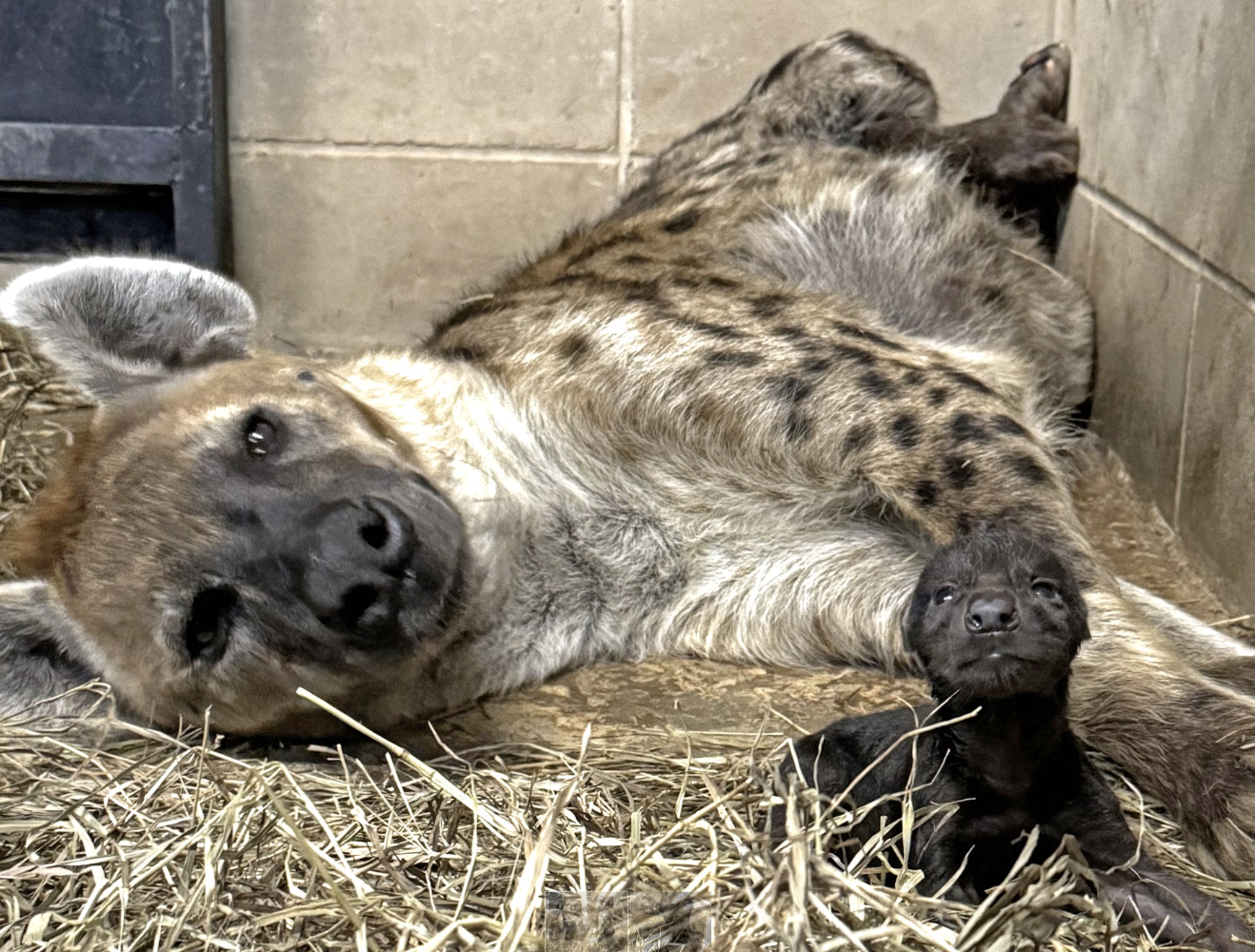
SALINA, KS — Rolling Hills Zoo is excited to announce the birth of its first spotted hyena cub, born September 3, 2026. The cub is the first offspring for both parents, making the arrival an especially significant milestone for the zoo and its participation in the Association of Zoos & Aquarium’s (AZA) cooperative breeding programs.
The cub’s mother, Maxi - born in 2012, came to Rolling Hills Zoo from Zoo Miami in Florida. The father, Kito, was born in 2022 at Hattiesburg Zoo in Mississippi. Both Maxi and Kito came to Rolling Hills Zoo as part of a breeding recommendation designed to support the genetic diversity and long-term sustainability of the species in human care.
“This is an exciting birth for Rolling Hills Zoo and a wonderful opportunity for our guests to learn more about one of Africa’s most fascinating and often misunderstood predators,” said Ryan VanZant, Executive Director of Rolling Hills Zoo. “Since Maxi is a first-time mother our animal care team is giving her and her cub plenty of space while monitoring them closely.”
“I am very proud of Maxi for being an amazing first time mom,” shared Jackie Bach, Hyena Keeper. “I am excited to see how this cub grows up.”
A Remarkable Beginning
Spotted hyenas have a gestation period of approximately 110 days, and litters typically consist of one or two cubs, with three being rare.
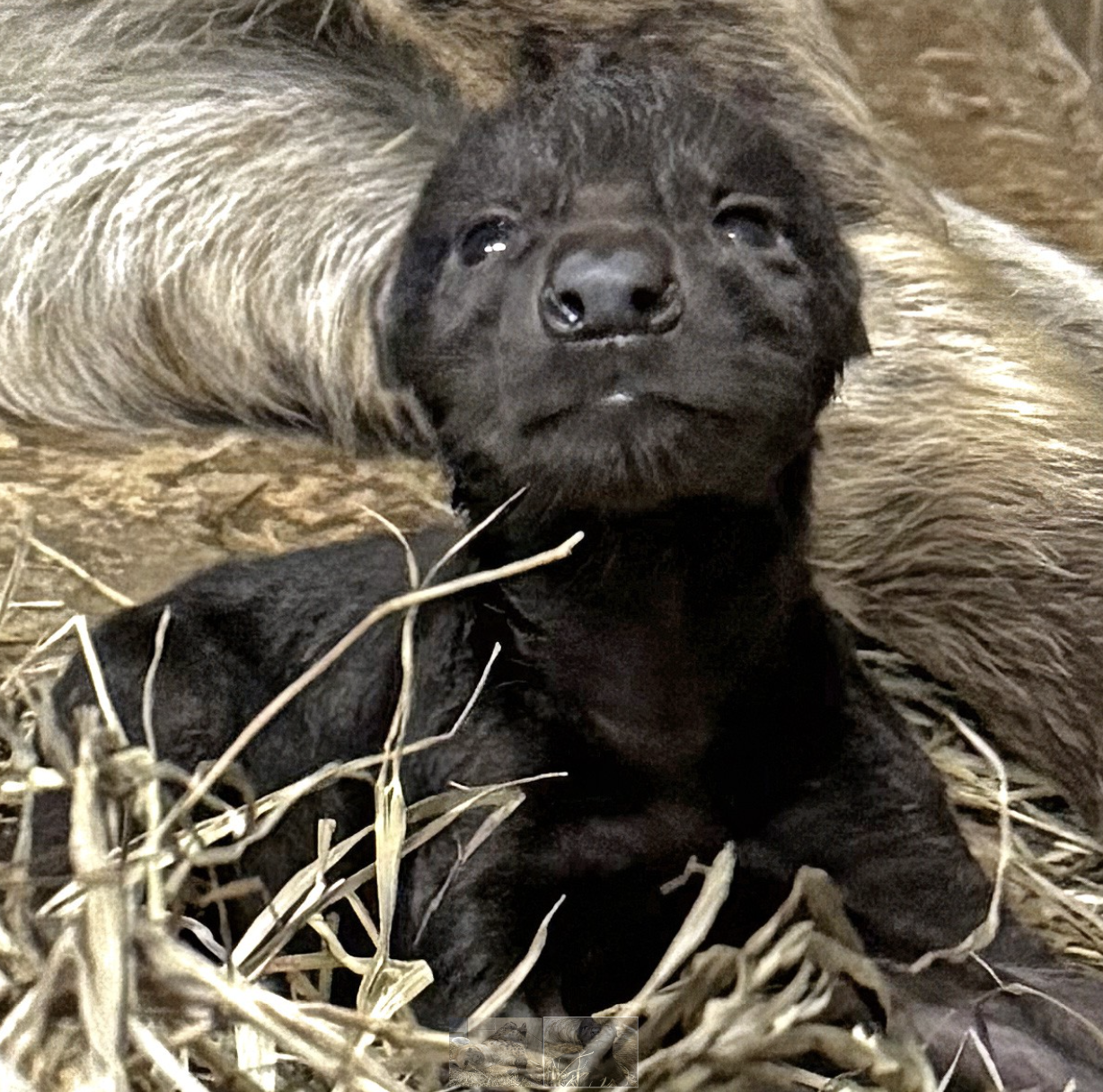
At birth, spotted hyena cubs are surprisingly well-developed. They are born with dark or nearly black fur, their eyes are already open, and they arrive weighing approximately three pounds—with sharp teeth already in place!
With its fuzzy dark coat and curious appearance, the new cub currently looks like an adorable cross between a bear cub and a puppy, but it will grow into a powerful and highly capable predator.
In the wild, spotted hyena mothers give birth in underground dens, where cubs remain hidden and protected for the first two to six weeks of life. By about four weeks of age, cubs become increasingly active, venturing outside the den, exploring their surroundings,
wrestling and beginning to develop the vocalizations and social behaviors that are important to life within a hyena clan.
Spotted hyena cubs nurse on their mother's exceptionally rich milk for many months, although they may begin experimenting with solid meat at around two-and-a-half months of age.
An Important Conservation Story
Spotted hyenas are highly intelligent, social animals that live in complex family groups called clans. They are also important predators and scavengers that play a valuable role in maintaining healthy ecosystems.
Although the overall wild population of spotted hyenas remains relatively large, populations are declining in areas outside protected habitats. Like many African wildlife species, spotted hyenas face increasing pressure from human activity.
Human-wildlife conflict is a significant threat, particularly when farmers kill hyenas to protect livestock. Hyenas can also become victims of snaring, accidentally becoming trapped in wire snares set for other wildlife. At the same time, habitat loss continues as expanding towns, farms and other development reduce the amount of land available for wildlife.
The birth of Maxi and Kito's cub provides Rolling Hills Zoo with another opportunity to connect guests with wildlife and demonstrate the importance of conservation efforts that help protect these remarkable animals in the wild.
“Every birth is special, but a first birth is especially exciting,” added VanZant. “We’re looking forward to watching this little cub grow and allowing our guests to follow along as it develops its own personality and begins to discover the world around it.”
For now, the zoo’s animal care team is allowing Maxi and her cub plenty of quiet time together. Guests will be able to follow updates on the cub’s progress through Rolling Hills Zoo’s social media channels and website as the young hyena grows.
About Rolling Hills Zoo
Rolling Hills Zoo, located west of Salina, Kansas, is an accredited zoological park dedicated to connecting people with wildlife and inspiring conservation. The zoo is home to more than 90 species and participates in cooperative conservation and breeding programs designed to help ensure the future of threatened and endangered wildlife.