


By: ALYSSA STORM
KSU: Department of Grain and Food Science
For every child who walks into school and worries only about whether chocolate milk is available for breakfast, there are teams of K-State researchers, scientists and industry partners working behind the scenes to make sure the rest of the food on that tray is as nutritious as possible.
Over the past year, K-State faculty and students in bakery science and industry have partnered with state and industry leaders to help develop a sorghum-based muffin mix that could eventually be served in Kansas schools.
The effort is part of the Farm to Plate Project, which aims to connect locally grown agricultural products with school nutrition programs across the state.
When sorghum was added to the U.S. Department of Agriculture Buying List in 2022, it opened the door for new ways to incorporate the whole grain into school meals. Because Kansas produces roughly half of the nation's sorghum crop, state agencies and industry leaders saw an opportunity to reimagine how the grain could be used.
In 2025, the Kansas State Department of Education, or KSDE, began exploring ways to introduce sorghum into schools as an additional whole-grain option. The agency connected with Nu Life Market, one of the nation's largest sorghum milling and food processing companies, to develop a product that could appeal to students.
The goal was simple: create a breakfast muffin with sorghum as the first ingredient.
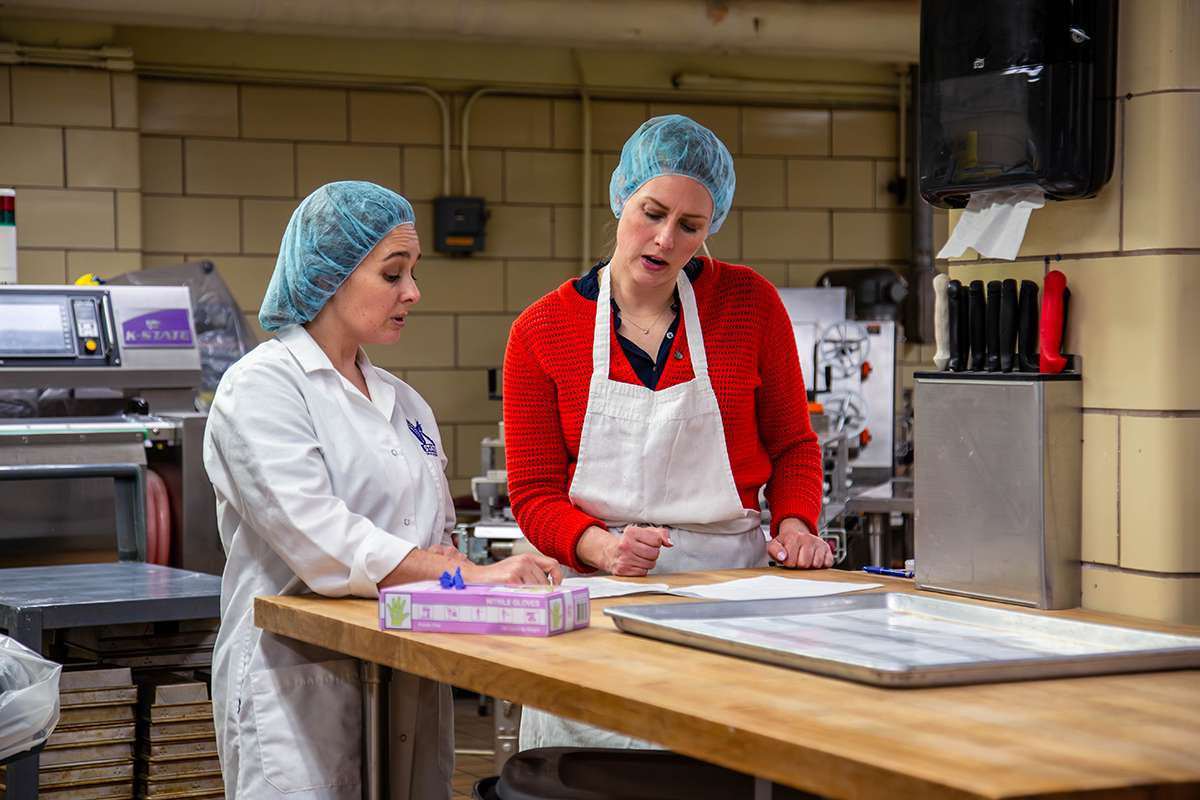
"Nu Life Market has always focused a lot on education and awareness with consumers and the companies that we work with," said Rachel Klataske, senior director of business development at Nu Life Market. "And there's no better person to educate than a child because their minds are very open. They like trying new things."
Klataske, a K-State bakery science and management alumni, drafted the initial formulation and worked with KSDE to ensure it met school nutrition requirements. The recipe was then shared with Elisa Karkle, assistant professor of grain and food science, who brought the project into the classroom and laboratory.
Applied learning with real-world impact
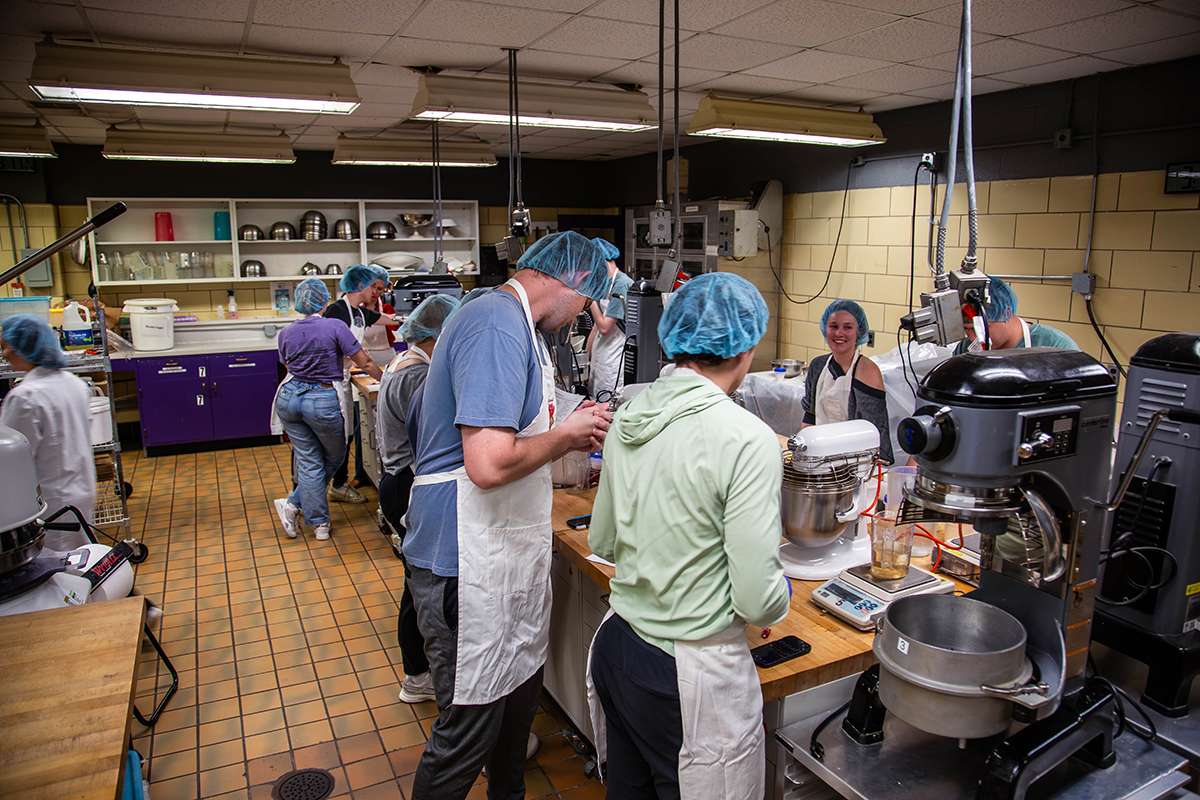
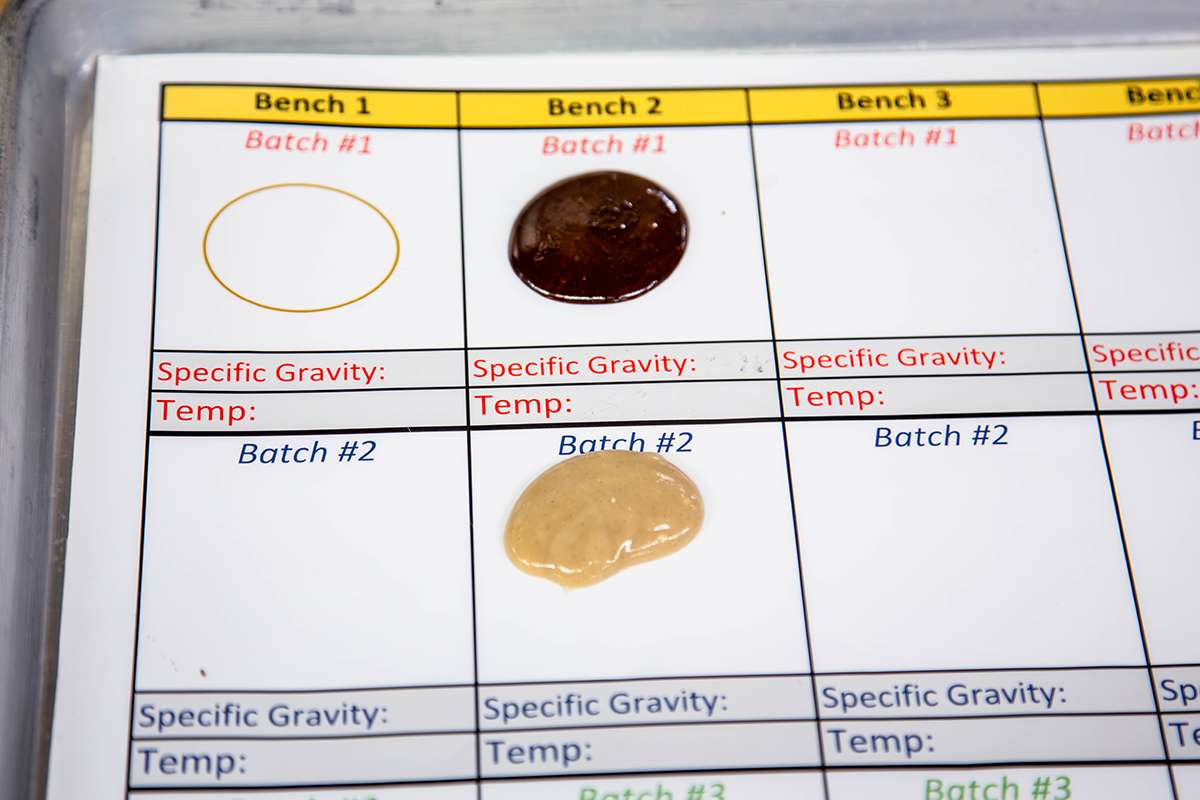
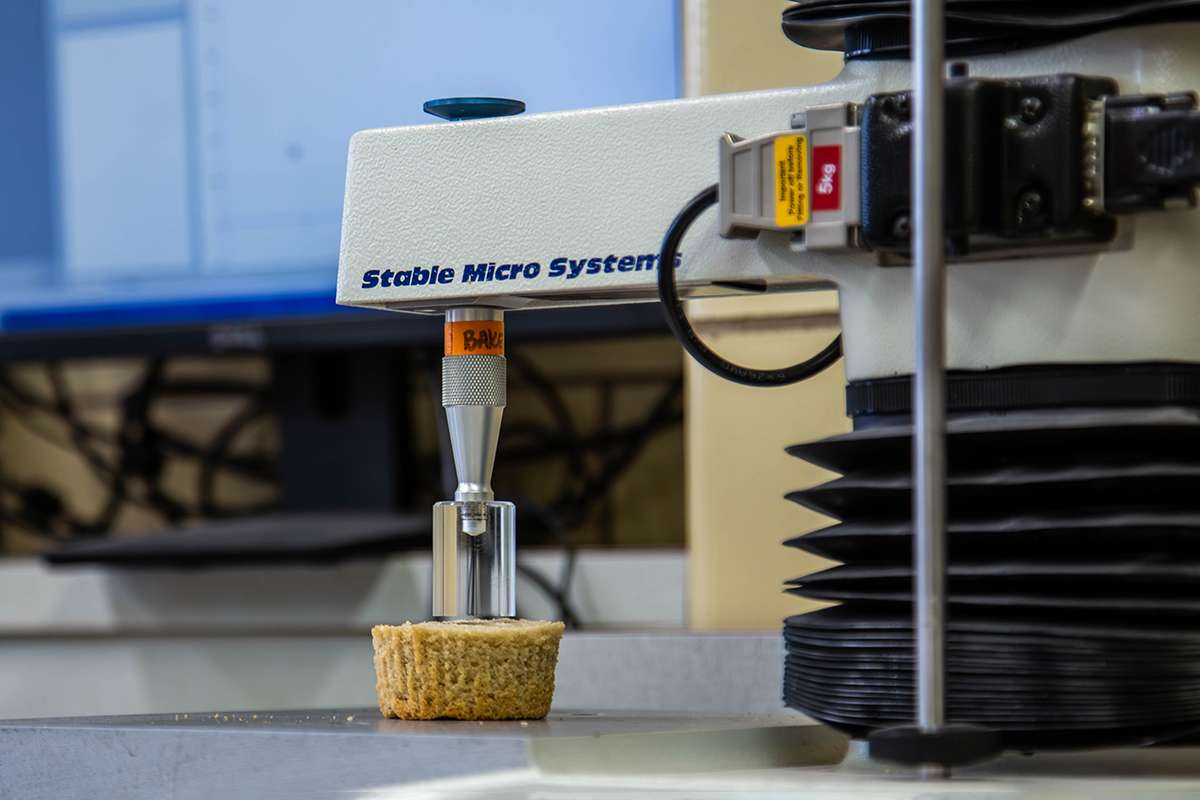
Two students in Karkle's Bakery Science II class selected the sorghum muffin project to work on in the course — one student focusing on texture, and the other on flavor. Using the Department of Grain and Food Science's pilot laboratory, they tested and refined recipes with the same equipment and processes used in commercial bakeries.
Griffin Cummings, one of the two students, said he liked the idea of working on something with a real-world connection.
"I thought that project would be more meaningful and contribute to a larger research project compared to doing my own fun experiment that wouldn't really have any broader application," said Cummings, a spring 2026 graduate in food science and industry.
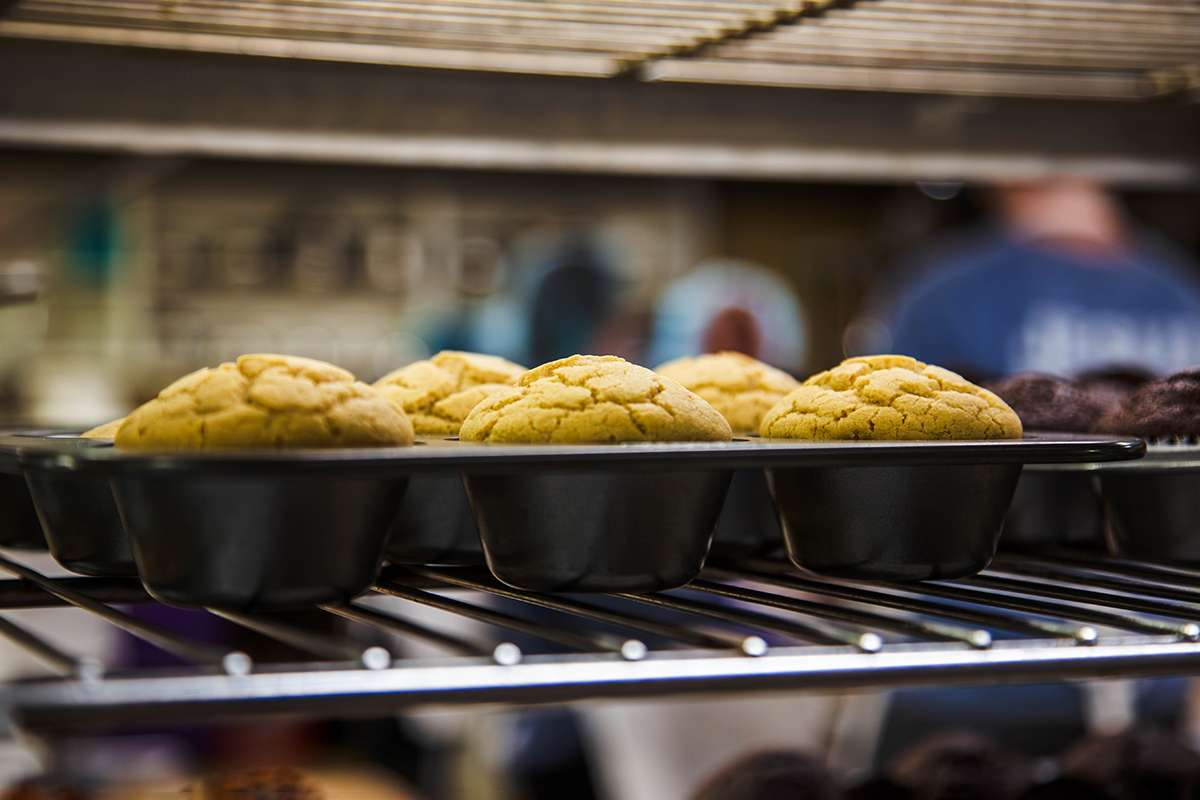
Cummings focused on making sure the texture of the whole-grain, gluten-free muffin was as close as possible to that of a traditional muffin.
"When they talk about applied learning experiences, that's it," Karkle said. "They are doing what someone would do as a professional formulator. They're already seeing the same challenges Rachel sees as a bakery science graduate who has spent 15 years in the field. This is part of the job."
Thinking like a cafeteria kid
With the base formula done, Addison Brandau, a senior in bakery science and management and food science and industry, focused on flavor development.
Because the project could eventually reach school cafeterias across Kansas, Brandau approached the assignment from a student's perspective.
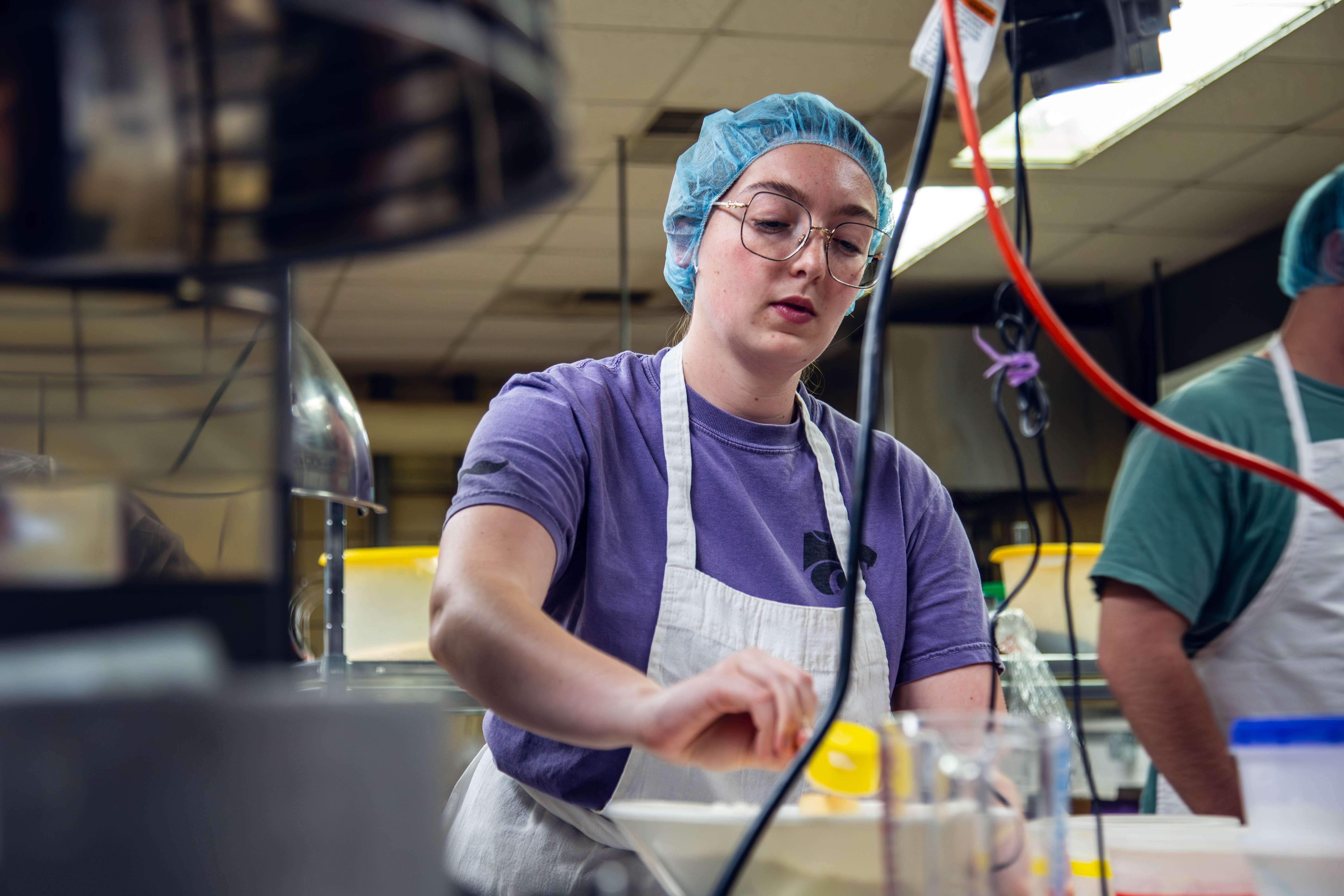
"It's kind of a fun thought experiment of thinking, 'What did I eat as a kid?' and what were my opinions as a child," Brandau said. "I would never eat a muffin that was slightly brown. If it looked healthy, I wouldn't eat it. So maybe doing a chocolate muffin helps hide some of that gluten-free, healthy aspect."
Brandau initially experimented with blueberries, apple-cinnamon combinations and chocolate chips.
After several rounds of testing and feedback from Karkle, she landed on a new variation that looked as appealing as it tasted. Instead of using chocolate chips, Brandau used chocolate shavings, leading to a difference in density and a "a lot more chocolate showing up instead of a chunk."
"That worked beautifully," Karkle said. "This process encouraged our students to think creatively and to work through the challenges of recipe development. They dream, and we help make it happen, but they have to figure out what they want and how they'll get there."
Preparing for the future of Kansas agriculture
Now that the semester has ended, the texture analysis and flavor-testing results will be shared with KSDE as the project moves into its next phase: creating a powdered sorghum muffin mix for distribution to schools across Kansas.
There are still several steps before the muffin mix reaches children's lunch trays, as it moves through the state education department's evaluation process, but everyone involved sees value in developing products that use crops grown close to home.
As agricultural conditions change, the K‑State researchers say it is important to understand how grains besides wheat can contribute to the food system, especially as water challenges push producers to look at more drought-tolerant crops like sorghum.
"Sorghum grows very well under drought conditions," Karkle continued. "Having that option means we're not scrambling in 10 years asking, 'What do we eat?' We've already introduced it. We know it's viable. We know it's tasty. We know how to process it, and kids accept it because they've seen it in schools."
For Klataske, the project is rewarding not only as a food scientist and K-State graduate, but also as a parent.
"I have kids in school, so it's kind of fun from that personal standpoint too," Klataske said. "When I was in product development, it was always fun to see a product on the shelf and say, 'Hey, I did that.' Think about that impact. More than 100,000 kids who eat Kansas school breakfast every day could be eating something that you had a hand in creating. It's fun."