


Company owner says the seized products were a small portion of the total inventory, and employees were allowed to continue production while feds were there
BY: REBECCA RIVAS
Missouri Independent
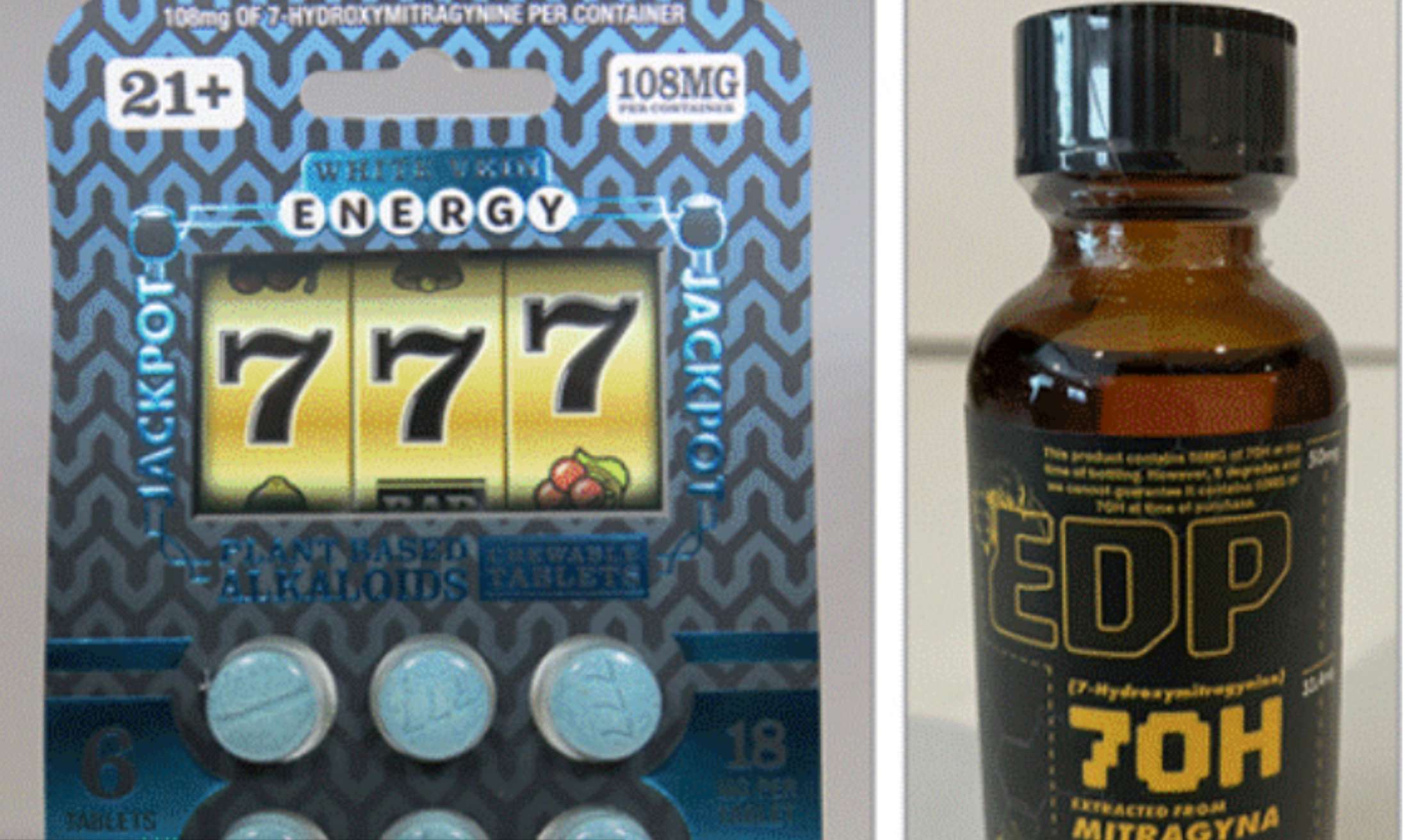
Federal agents this week seized 73,000 products containing 7-hydroxymitragine, commonly known as 7-OH, from three Kansas City-area warehouses.
The seized products included things like power bars, pills and liquids shots that are made with a concentrate of 7-OH, which is the main opioid-inducing element in kratom.
The action came out of a partnership between the U.S. Food and Drug Administration and U.S. Justice Department, according to the DOJ’s press release issued Tuesday.
“While 7-OH occurs naturally in trace amounts in the plant kratom, products containing 7-OH as an added ingredient can be dangerous,” states a civil forfeiture complaint filed on Nov. 21 in the U.S. District Court for the Western District of Missouri. “In the human body, 7-OH is able to bind to opioid receptors, raising concerns about its potential for abuse.”
7-OH products are advertised as improving chronic pain and “mental clarity,” and they are sold in Missouri smoke shops, gas stations, convenience stores and online shops.
The FDA sent warning letters in June to the facility owners, Shaman Botanicals LLC and Relax Relief Rejuvenate Trading LLC, stating the 7-OH products were considered “adulterated” and their labels were illegal under federal food laws.
On Nov. 12 and 13, FDA officials did an unannounced inspection of the three facilities, where they tagged and detained 76,000 units. Vince Sanders, who owns Shaman Botanicals LLC, said the company had the opportunity to appeal the FDA’s action, which they did. Shaman was the first company to make 7-OH products, Sanders said.
The DOJ filed a complaint to seize the detained products on Nov. 21, and officials from the FDA and U.S. Marshal Service seized the tagged boxes on Tuesday.
“The 7-OH products seized are illegal under federal law and pose risks to consumers, including children,” said R. Matthew Price, U.S. attorney for the Western District of Missouri. “We are committed to helping American consumers protect themselves from dangerous chemicals posing as health products.”
Price said the department will continue to work with the FDA “to ensure illegal products never enter the stream of commerce and pursue all possible civil and criminal remedies against those who violate federal laws.”
However, Sanders told The Independent Thursday the seized units were only a small portion of the 7-OH products that were at the warehouse during the FDA’s November inspection. And his employees were allowed to continue making products while the federal agents were tagging and later seizing products in the warehouse.
“This is the craziest part,” Sanders said. “We literally sat there continuing to make the same products that they were taking.”
Sanders said the agents explained that they were targeting the finished packages, but there were many more finished products in the warehouse than the ones that were detained and ultimately seized.
In the FDA’s June warning letter, the agency deemed that 7-OH is a “new dietary ingredient.” The letter states that a dietary supplement is adulterated under the Federal Food, Drug, and Cosmetic Act if it contains a new dietary ingredient that doesn’t have enough evidence to show it isn’t dangerous.
“Because there is inadequate information available to provide a reasonable assurance that 7-OH does not present a significant or unreasonable risk of illness or injury, it is illegal to sell dietary supplement products containing it as an ingredient,” the release states.
Sanders told The Independent in July that his company conducted three research studies on the products, including using rodents and beagles, which he believes shows the products are safe.
“This is just destroying something that has the potential to save hundreds of thousands, if not millions, of lives long term,” Sanders said.
He said there will likely be a hearing on the recent action in the next few weeks.
On the same day the DOJ’s complaint was filed on Nov. 21, Missouri Attorney General Catherine Hanaway sent “civil investigative demand” letters to Sanders’ company and six other producers and distributors of 7-OH products.
The letters mandate the company hand over multiple types of documents, including lab test results, research on health risks and safety label information.
Consumers, Hanaway said in a press release, “may be exposed to unapproved, unsafe and deceptively marketed opioid-like drugs.”
According to the letters sent to each company, the attorney general’s investigation targets the distribution of products containing 7-OH or “any part of the plant Mitragyna speciosa,” which is the kratom plant.
“We are deeply concerned,” Hanaway said, “that Missourians are being sold drug-like substances under the guise of harmless supplements, with no FDA approval, no safety testing, and in some cases no meaningful disclosure of what these products actually contain.”