


MARC JACOBS
Hutch Post
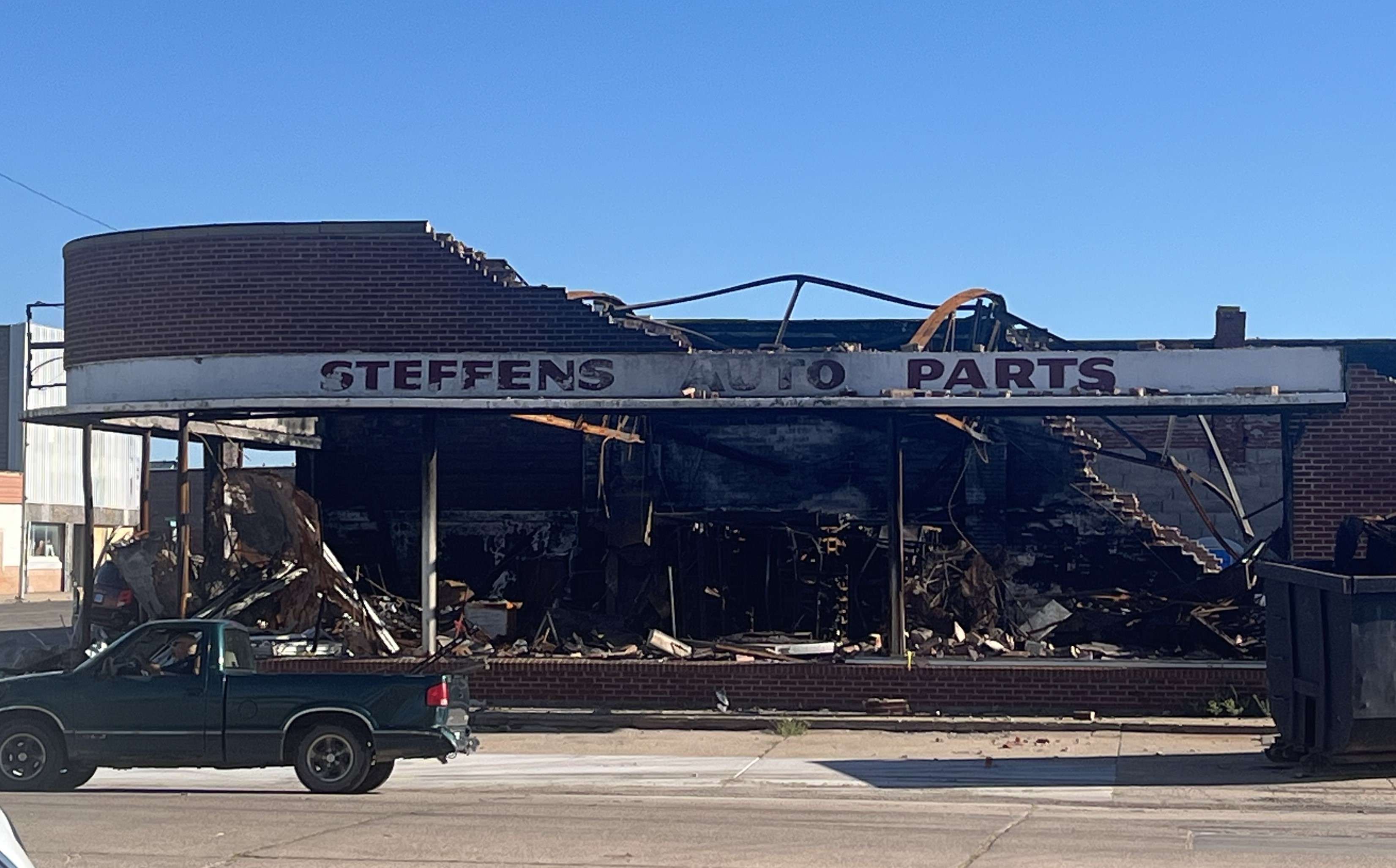
HUTCHINSON, Kan. — A weakened weld in a natural gas main installed in 1936 failed and allowed gas to collect inside Steffens Auto Parts, causing the explosion that destroyed the building in February 2025, according to the National Transportation Safety Board.

The agency’s report, issued Sept. 11, identified the failed weld as the probable cause of the Feb. 22 explosion and fire. No one was injured or killed, but about 16 businesses and 51 residences were evacuated. Property damage was estimated at $875,000.
Investigators determined the original weld did not fully penetrate the joint or properly bond with the surrounding pipe, reducing its strength. An undetermined external force caused the weld to fracture on the 10-inch Kansas Gas Service main operated by ONE Gas Inc.
Downtown gas leak and fire
The escaping gas traveled underground and accumulated inside the commercial building, where it ignited. Investigators could not determine the specific route the gas took into the building.
The report describes a narrow escape for the building’s sole occupant and responding firefighters.
A caller reported smelling gas about a quarter-mile north of the business at approximately 9:26 a.m. Firefighters arrived about seven minutes later and confirmed natural gas near the building at 9:47 a.m.
When firefighters entered Steffens Auto Parts, their gas monitors immediately sounded an alarm. They evacuated themselves and the occupant. Seconds later, at approximately 10:05 a.m., the building exploded.
Kansas Gas Service responders arrived at approximately 10:26 a.m. Crews monitored gas levels, investigated underground migration routes and ventilated buildings, utility vaults and sewer systems. Snow, ice and prolonged freezing temperatures complicated excavation and leak detection.
Crews finished isolating the affected pipeline segment at 3:34 p.m. The fire was fully extinguished at 8:51 p.m. Workers located the leaking weld early the following morning.
Investigators found no evidence of excessive gas pressure, erosion, settlement or recent construction that explained the failure. Possible external forces included soil freezing and thawing, changes in surface loads or soil movement, but the report did not establish which caused the fracture.
Before the accident, ONE Gas had determined that its vintage oxy-acetylene welds were not an actionable integrity threat. The company reported no previous failures involving those welds.
Following the explosion, ONE Gas reviewed utility crossings near vintage welds, improved data collection and developed a field reporting system to provide failure information in real time.
The NTSB credited emergency responders’ evacuations and continued gas monitoring with reducing public exposure and helping prevent additional explosions. The report also emphasized the value of natural gas alarms, which can provide early warning of dangerous gas accumulation inside buildings.