


BY ANNA KAMINSKI
Kansas Reflector
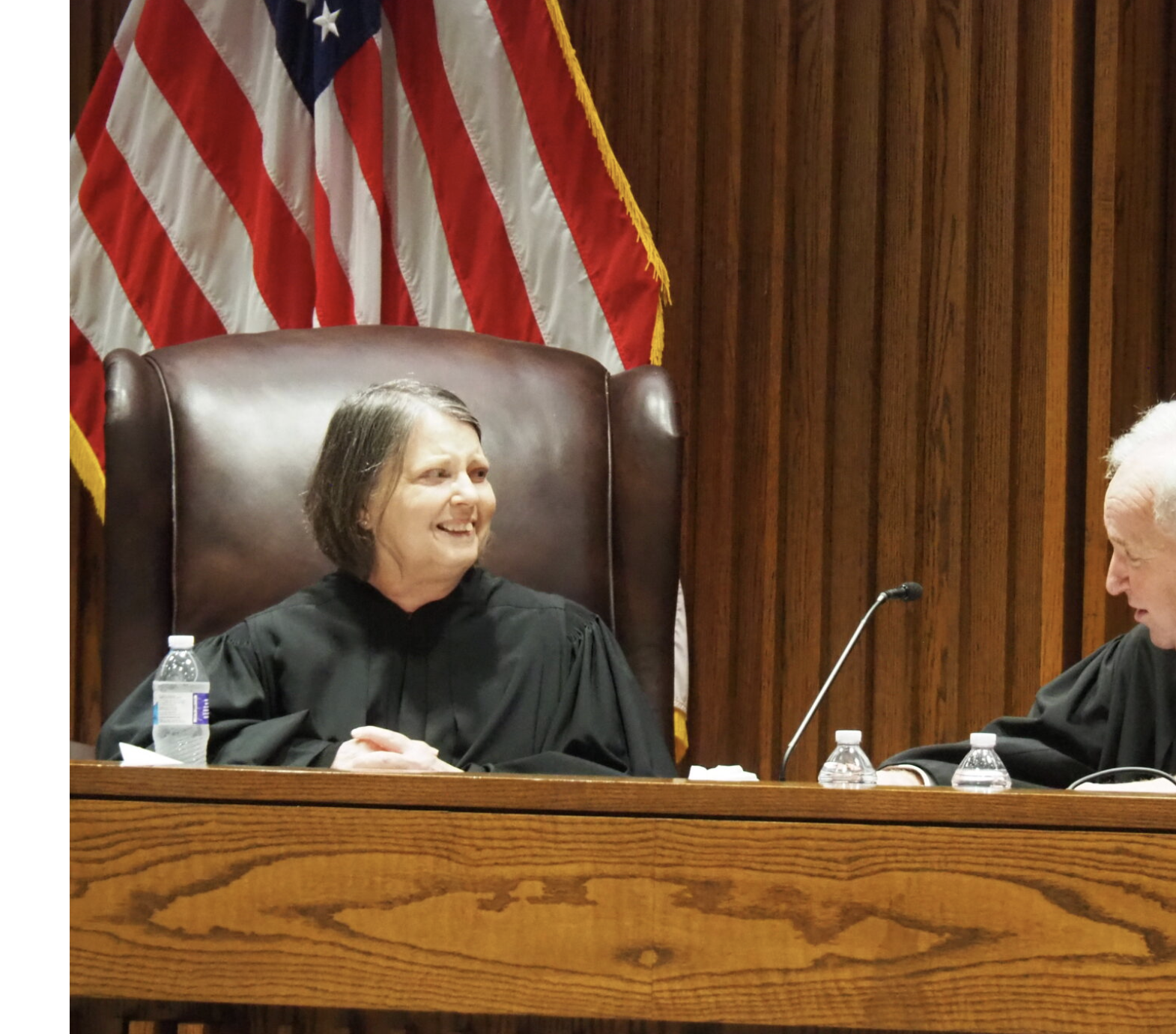
TOPEKA — Kansas Supreme Court Justice Marla Luckert will retire later this month, an announcement from the court said.
Luckert suffered a stroke in October that led to a car accident. She relinquished public-facing duties before deciding in December to step down from her position as chief justice. She will abdicate her seat on the court on March 28.
“It has been my profound honor to serve the people of Kansas as a district court judge and Supreme Court justice the last 34 years,” Luckert said in a Tuesday press release. “Growing up in Goodland, I did not imagine I would one day serve on our state’s highest court, and I hope the blessings in my life inspire young women to reach for goals that may seem unattainable.”
Luckert spent 23 years on the Kansas Supreme Court. She previously was a Shawnee County district judge and the first woman in Kansas to be a chief district judge. Former Gov. Bill Graves appointed Luckert to the Supreme Court in 2003, and she became chief justice in 2019.
Under her guidance, the court prioritized collaboration among the three branches of government in addressing statewide issues such as mental health crises, child welfare and rural attorney shortages.
She saw the court through a pandemic, technology woes and a cyber attack, and her court issued landmark decisions on education funding, voting rights, abortion and the death penalty.
Justice Eric Rosen took her place as chief in January.
Luckert is the second justice in the past year to leave the bench, following Justice Evelyn Wilson’s retirement in July because of a Lou Gehrig’s disease diagnosis. Justice Larkin Walsh took her place ahead in September and was formally sworn in two months later.
Luckert’s replacement could be outgoing Democratic Gov. Laura Kelly’s final appointment to the court before Kelly leaves office in early 2027. The governor has appointed four others to the court during her two terms.
The replacement process likely will precede an August ballot question that will ask voters if they want to change the Kansas Supreme Court justice selection process from a merit-based application, nomination and appointment method to a campaign-driven popular vote approach.