



By: Morgan Chilson
Kansas Reflector
LEAVENWORTH — CoreCivic will reopen its private prison in Leavenworth to house immigration detainees after city commissioners approved the company’s special use permit on Tuesday, the result of a process one commissioner called “agonizing.”
One person was arrested and multiple people were ejected as they shouted profanity during an hour of public comments and 30 minutes of discussion before the city commission voted 4 to 1 to approve the permit.
CoreCivic and the city of Leavenworth have been fighting for a year as the company sought to reopen the prison it closed in 2021. With a $60 million U.S. Immigration and Customs Enforcement annual contract in hand, the Nashville-based private prison company tried through the courts to reopen without going through the city’s development process.
Brian Todd, a CoreCivic spokesman, said in a statement that ICE officials would decide when the Midwest Regional Reception Center will begin housing detainees.
“As we have from the start, CoreCivic remains committed to operating a safe, transparent and accountable facility,” he said. “We look forward to our continued partnership with the city and to the benefits the MRRC will bring to Leavenworth and the surrounding communities.”
The vote was a second — and final — consideration of CoreCivic’s special use permit, which sets regulations for how the prison will operate and oversight the city will provide.
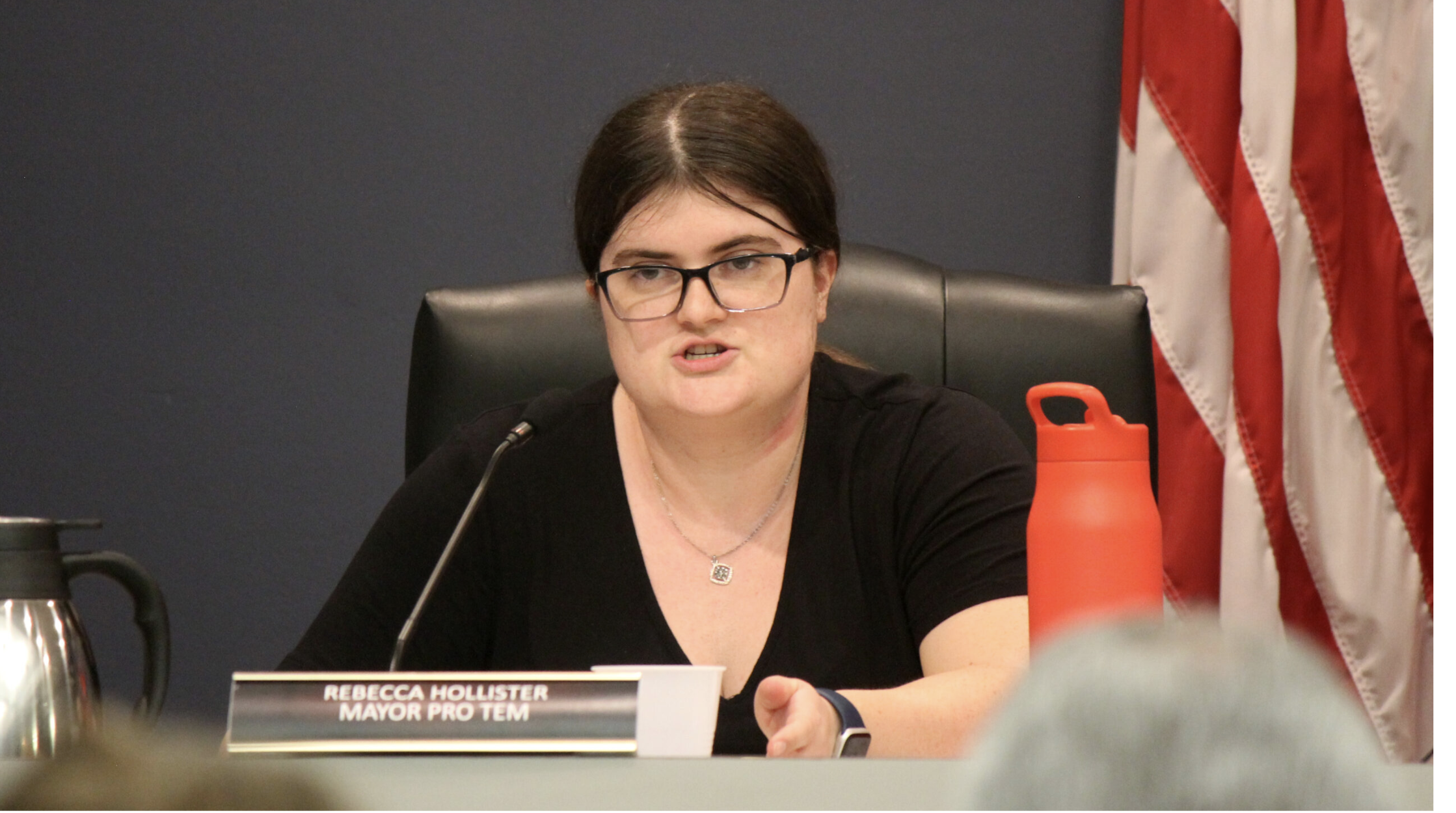
Commissioner Rebecca Hollister was the sole vote against the permit, as she was during the first consideration on Feb. 24.
How they voted
Hollister said specific issues outlined in the permit caused her to vote no, including a clause that requires breaches of the agreement to continue for 30 days after a notice before termination could occur.
“There have been valid concerns regarding potential violations that occur intermittently, but not necessarily for 30 days continuously,” she said.
Hollister said CoreCivic officials answered her questions and invited her into the facility, but that she believes the company’s promise of transparency and cooperation “requires a high level of trust” that is difficult for her to have, especially given the company’s problems at other facilities.
“With the knowledge I have right now, I just do not have sufficient faith that their operation would meet all the ‘golden factors’ in development regulations,” she said. “I hope to be wrong, and I think that’s possible based on my last positive conversations with staff.”
Two commissioners made it clear their positive votes swung on fiscal responsibility.
“This has been an agonizing process,” said Commissioner Joe Wilson. “Everybody wants to make this morality over fiduciary responsibility, but I think there is a real risk to the future of the city, based on how the vote turns out that has to be considered, that could have long-term ramifications for our children, for our tax base, for our law enforcement and our firefighters and the services that we can provide.”
Commissioner Holly Pittman agreed, saying leadership doesn’t mean choosing an easy path.
She was mayor last year for much of the city’s court fights with CoreCivic and was the subject of dark-money political ads accusing her of holding back progress by forcing CoreCivic to go through the special permit process.
Pittman said the vote wasn’t about immigration policy or national politics, or whether she or anyone else dislikes CoreCivice.
“It is a land use decision governed by law and by the constraints of our political authority,” she said. “After reviewing all the legal framework, the zoning standards and the court rulings, I believe denying this permit would expose our taxpayers to a significant financial risk, and I will not gamble the financial stability of this city.”
Mayor Nancy Bauder said Leavenworth didn’t have a permit when CoreCivic was previously open and if the company violates it, the city can pull the permit.
Commissioner Samuel Maxwell declined to comment.

Public comment
More than 115 people signed up to speak, but Bauder limited public comment to one hour, which allowed about 45 people to speak, three of whom were in favor of approving the special use permit.
At the February meeting, public comment lasted three hours.
Bauder said commissioners offered multiple opportunities for residents to share their views over the past year, and typically on second consideration of a special use permit, they don’t take public comment.
Many people ceded their time to others with simple statements asking the commissioners to vote against the permit. Others were passionate in their opinions about how CoreCivic and ICE’s presence would change Leavenworth.
“They drug you through the mud by the scalp face first for a year, and I will not see you bend a knee now,” said John Watt, of Junction City. “Stand up.”
Watt expressed a concern echoed by others that once the company is open and holding ICE detainees it will be difficult to enforce stipulations in the permit.
“Like a bloated tick, they’re going to get their head in and they’re going to swell up on those tax dollars and it will be very difficult to get them to move,” he said.
Some acknowledged the challenge facing commissioners.
“Unfortunately, CoreCivic has now put you in a position where your responsibilities to the city’s finances now lie in direct opposition to the responsibilities that you have as leaders to protect our people and our community,” said Daniel McIntosh, of Leavenworth.
The equation comes down to assessing risk, he said.
“If you vote yes, you lessen the risk to the immediate situation of the city’s finances, but you also place at risk the health, safety, welfare and liberty of individuals in that facility and outside,” McIntosh said. “While we appreciate the efforts you’ve taken to mitigate those risks, you run the risk that any oversight granted by this permit may not be enforceable at all.”
After the commission meeting ended, police took CreCivic officials and commissioners out through side doors to avoid the angry crowd of about 150 people who gathered outside, shouting “shame” repeatedly.
William Rogers, a former CoreCivic employee who has been active in protesting the company’s attempts to reopen, said before the commission meeting that he expected the permit to pass. He has little hope CoreCivic will treat incarcerated people better than in the past.
Rogers pointed to the recent death of Emmanuel Damas, an immigrant applying for asylum, who was arrested by ICE in Boston last year. Damas died from an infected tooth and the resulting sepsis infection after being held at the Florence Detention Center in Arizona, which is owned by CoreCivic.
Damas’ death reminded Rogers of the exact same situation that occurred when he was a prison guard at CoreCivic’s facility in Leavenworth. Rogers said he repeatedly sought medical treatment for a prisoner with an infected tooth and was ignored. He was off one day and returned to find the prisoner was in the hospital, near death from sepsis, Rogers said.
The prisoner lived, but Roger said he saw repeated instances like that while working at CoreCivic and that it makes him dread the future for the facility.
He also is concerned about the effects of a larger ICE presence in Leavenworth on people of different ethnicities.
“Let’s just call it what it is —- this is an attack on the brown people,” he said. “In the Hispanic community, people are afraid to come out. It doesn’t matter what their status is right now.”
Rogers said people who are doing everything they are supposed to and are here as asylum seekers are being put in jail by ICE.
At the gathering after the commission meeting, speakers stood to express their frustration but also to offer encouragement.
“Our work here, throughout the entire three years that we’ve been involved in this, is not in vain,” said Karla Juarez, executive director of Advocates for Immigrant Rights and Reconciliation. “I see new faces. I see new people advocating. New people making public comments. New people, actually a lot of people who believed that CoreCivic should open, now on our side.”