


CDC and public health officials are investigating an outbreak of Salmonella infections that has sickened 345 people in 27 states linked to jalapeño peppers. Businesses should check their inventory for the recalled jalapeño peppers and not sell or serve them, according to a statement on the CDC website.
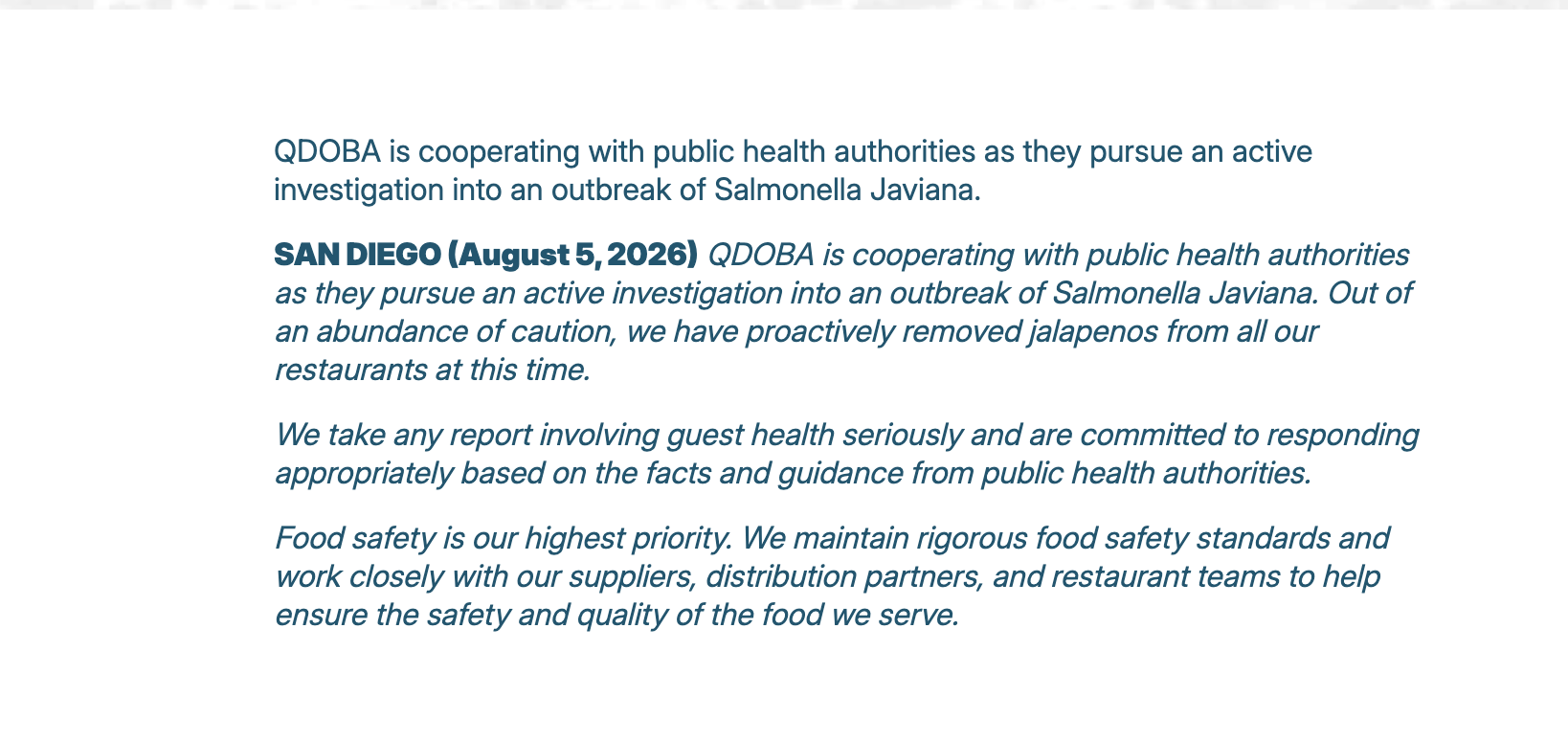
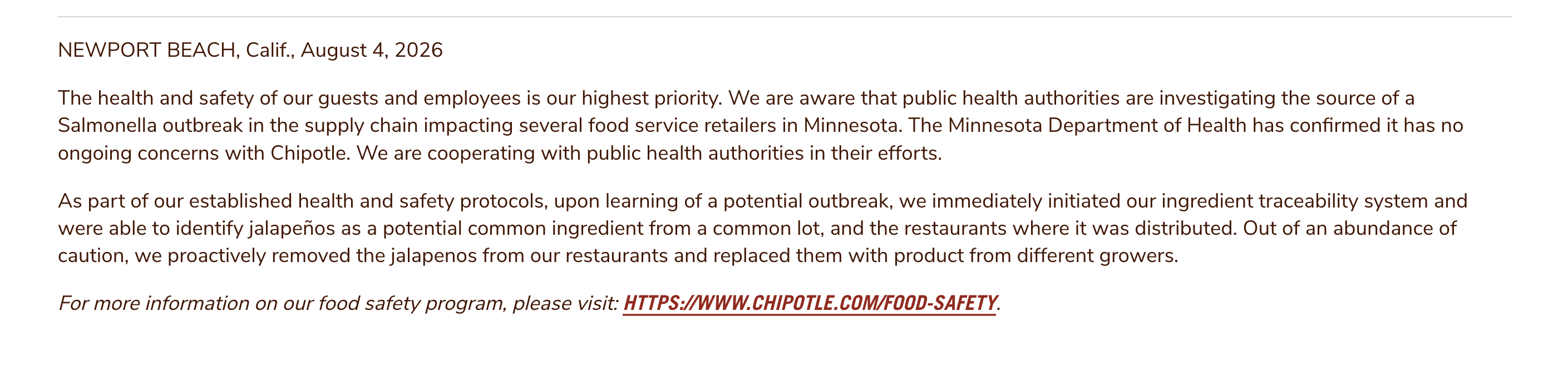
Restaurant chain Qdoba has followed Chipotle in removing jalapeños from its locations amid the salmonella outbreak
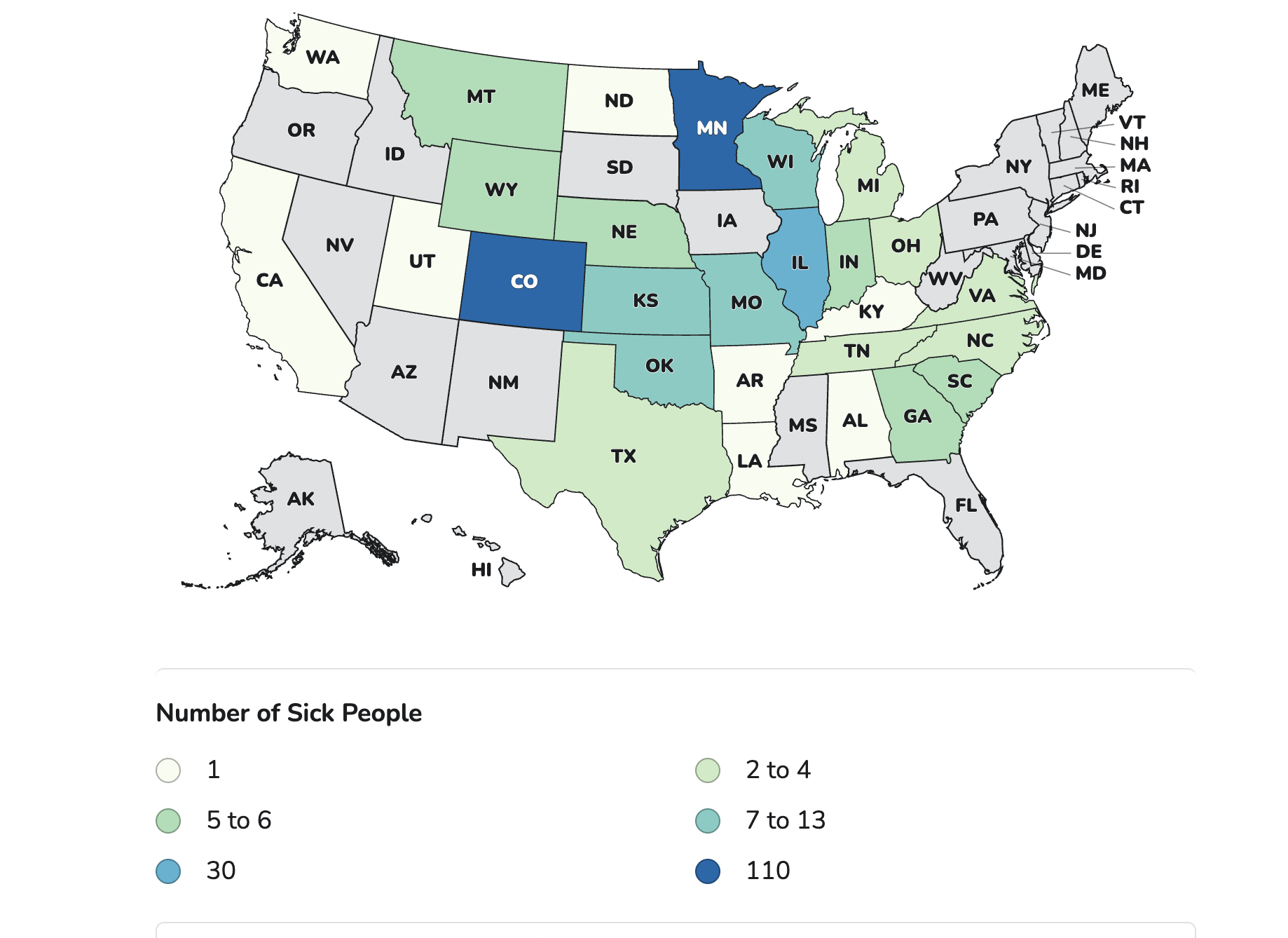
Kansas has reported 13 cases. Minnesota and Colorado each reported 110 cases. The other states included in the alert are Missouri, Nebraska, Alabama, Arkansas, California, Georgia, Indiana, Kentucky, Louisiana, Michigan, Montana, North Carolina, North Dakota, Ohio, Oklahoma, South Carolina, Tennessee, Texas, Utah, Virginia, Washington, Wisconsin and Wyoming.
CDC, public health and regulatory officials in several states, and the U.S. Food and Drug Administration (FDA) are collecting different types of data to investigate a multistate outbreak of Salmonella Javiana infections.
Epidemiologic and traceback data show that jalapeño peppers from Sinaloa, Mexico and distributed by Coast Citrus Distributors may be contaminated with Salmonella Javiana and are making people sick.
llnesses started on dates ranging from June 19, 2026 to July 20, 2026. The true number of sick people in this outbreak is likely much higher than the number reported, and this outbreak may not be limited to the states with known illnesses. This is because many people recover without medical care and are not tested for Salmonella. In addition, recent illnesses may not yet be reported as it usually takes 3 to 4 weeks to determine if a sick person is part of an outbreak.
Demographics
Public health officials collect many different types of information from sick people, including their age, race, ethnicity, other demographics, and the foods they ate in the week before they got sick. This information provides clues to help investigators identify the source of the outbreak.
Food exposure
State and local public health officials are interviewing people about the foods they ate in the week before they got sick. Of the 191 people interviewed, 177 (93%) reported eating at a Mexican-style restaurant before their illness, including Chipotle Mexican Grill and QDOBA, with meal dates ranging from June 14, 2026, to July 14, 2026.
Many sick people were identified as part of illness clusters. An illness cluster is defined as two or more people who do not live in the same household who report eating at the same restaurant location, attending a common event, or shopping at the same location of a grocery store in the week before becoming sick. Investigating illness clusters can provide critical clues about the source of an outbreak. If several unrelated sick people ate or shopped at the same location of a restaurant or store within several days of each other, it suggests that the contaminated food item was served or sold there.
Twenty-seven illness clusters have been identified at Chipotle Mexican Grill and QDOBA locations in 7 states. Commonly reported ingredient items included jalapeño peppers, red onion, cilantro, and avocado.
Laboratory and Traceback Data
Public health investigators are using the PulseNet system to identify illnesses that may be part of this outbreak. CDC PulseNet manages a national database of DNA fingerprints of bacteria that cause foodborne illnesses. DNA fingerprinting is performed on bacteria using a method called whole genome sequencing (WGS). WGS showed that bacteria from sick people's samples are closely related genetically. This suggests that people in this outbreak got sick from the same food.
Based on WGS analysis, bacteria from 343 people samples had no predicted antimicrobial resistance. Bacteria from one person's sample were predicted to be resistant to ampicillin, ceftiofur, ceftriaxone, streptomycin, sulfisoxazole, trimethoprim-sulfamethoxazole, and to be nonsusceptible to ciprofloxacin. Bacteria from another person's sample were predicted to be resistant to azithromycin.
Most people with Salmonella illness recover without antibiotics. However, if antibiotics are needed, Salmonella illness with this predicted resistance may not be treatable with commonly recommended antibiotics and may require a different antibiotic choice. More information is available at National Antimicrobial Resistance Monitoring System (NARMS).
As part of this investigation, FDA conducted a traceback investigation based on where ill people reported eating during the timeframe of interest, and a common grower of jalapeños in Sinaloa, Mexico that supplies to Coast Citrus Distributors was identified as the likely source in this outbreak.